Build a Token Management System With AI and No-Code
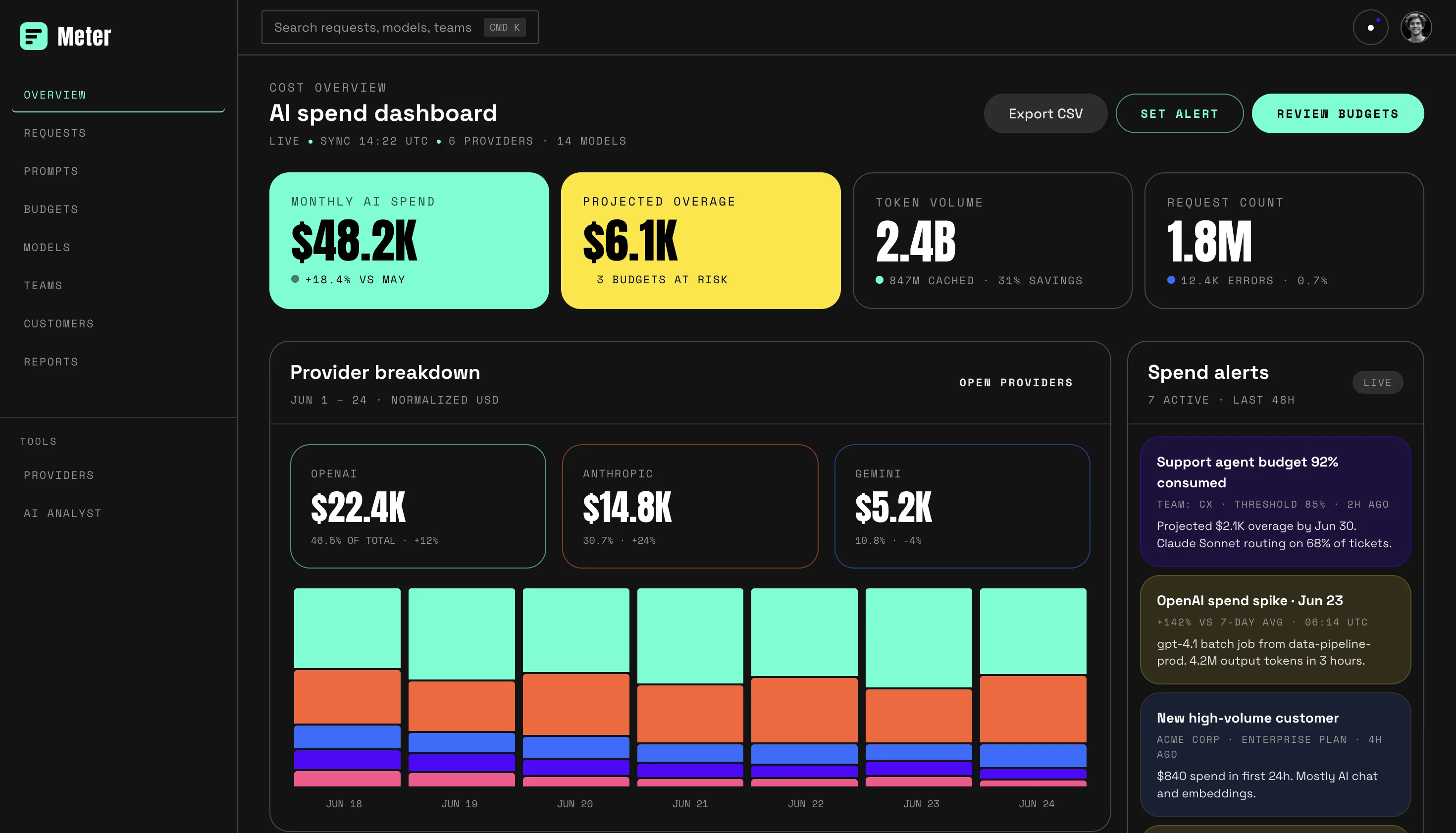
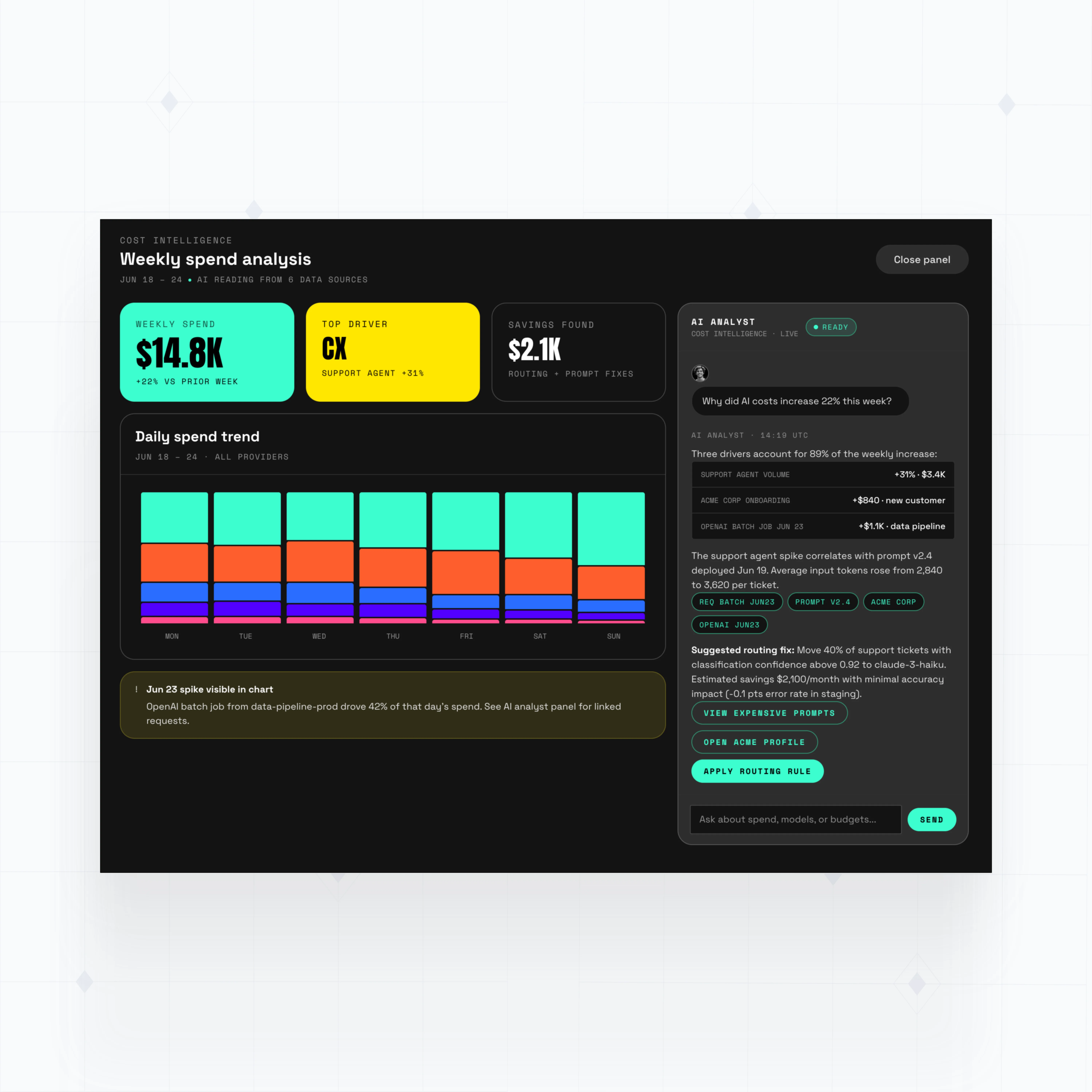
AI features can consume tokens fast when every prompt, retry, agent, and model call runs through different systems. WeWeb helps you build a token management system that tracks usage by product, team, customer, workflow, and model.
Trusted by founders & Fortune 500s
Add token management features off-the-shelf tools miss
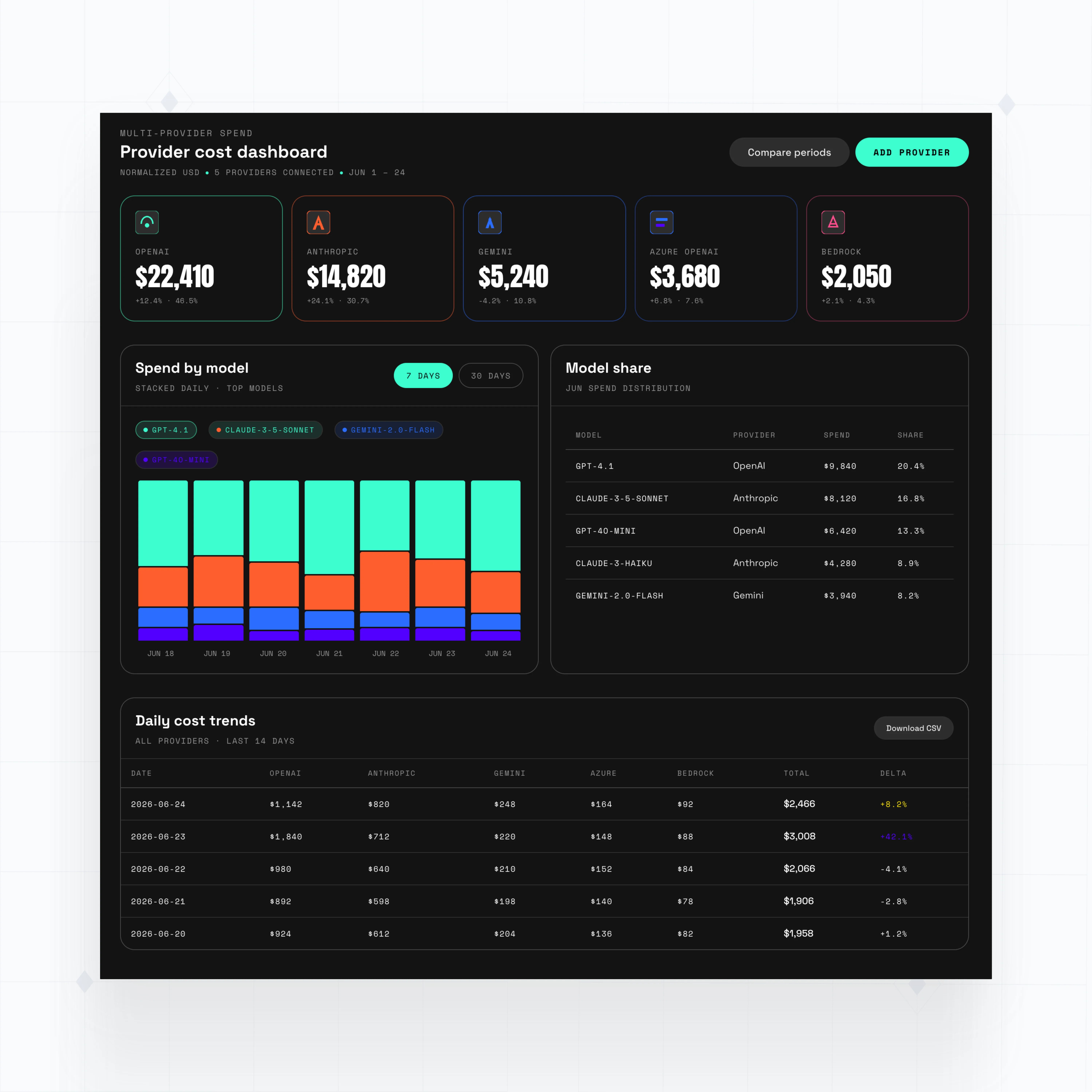
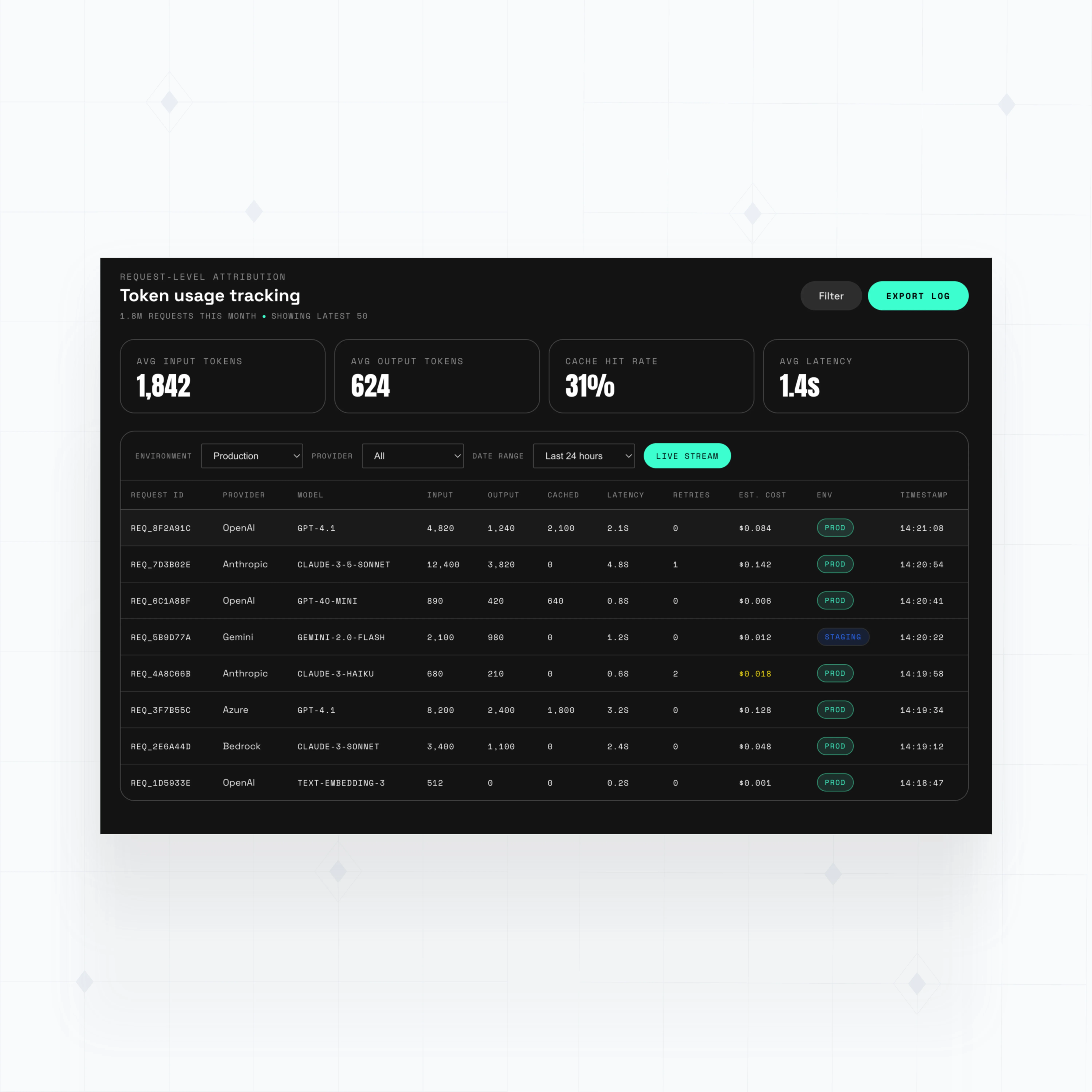
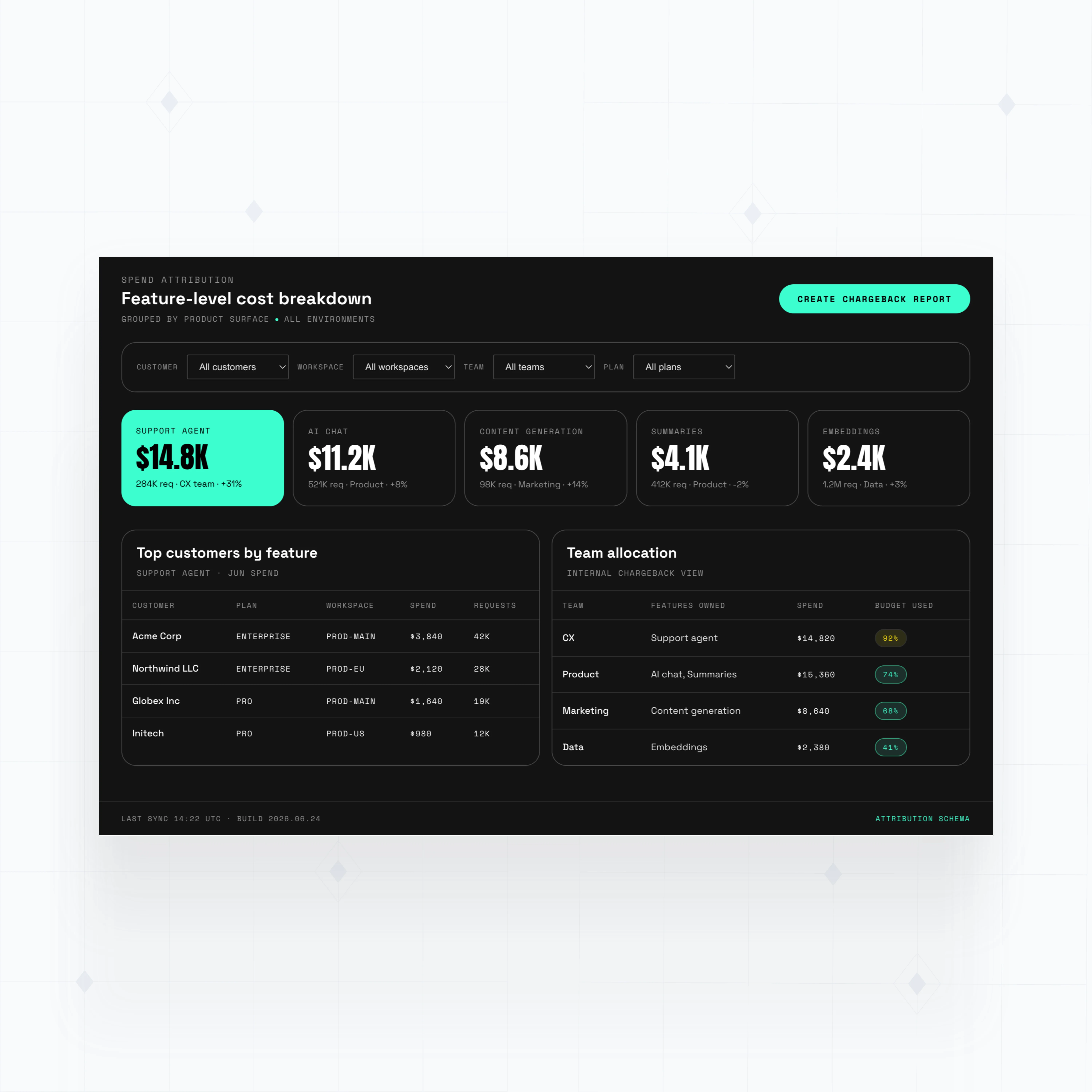
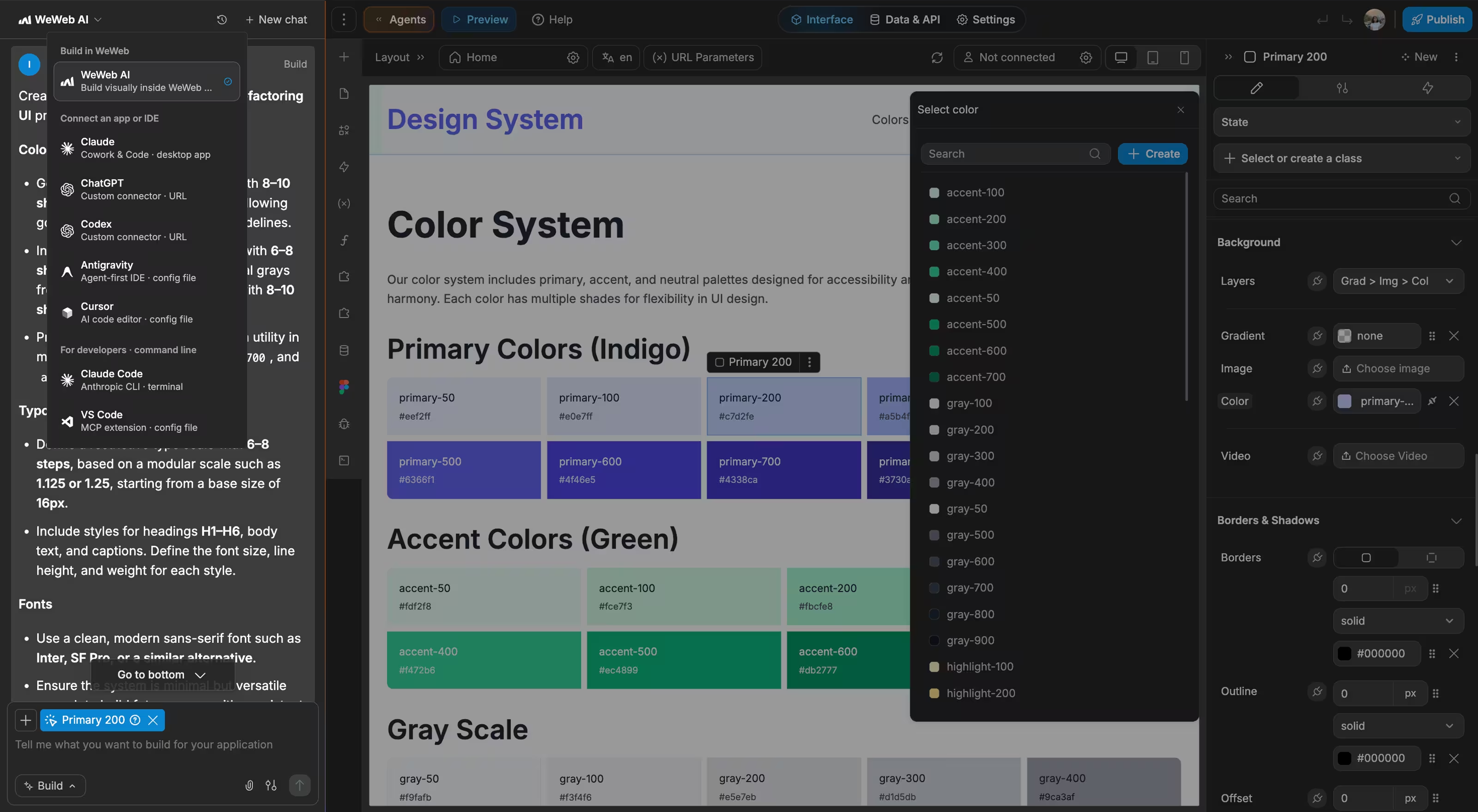
With WeWeb AI, build dashboards, request logs, quota controls, policy views, alert workflows, and usage reports around your AI token data.
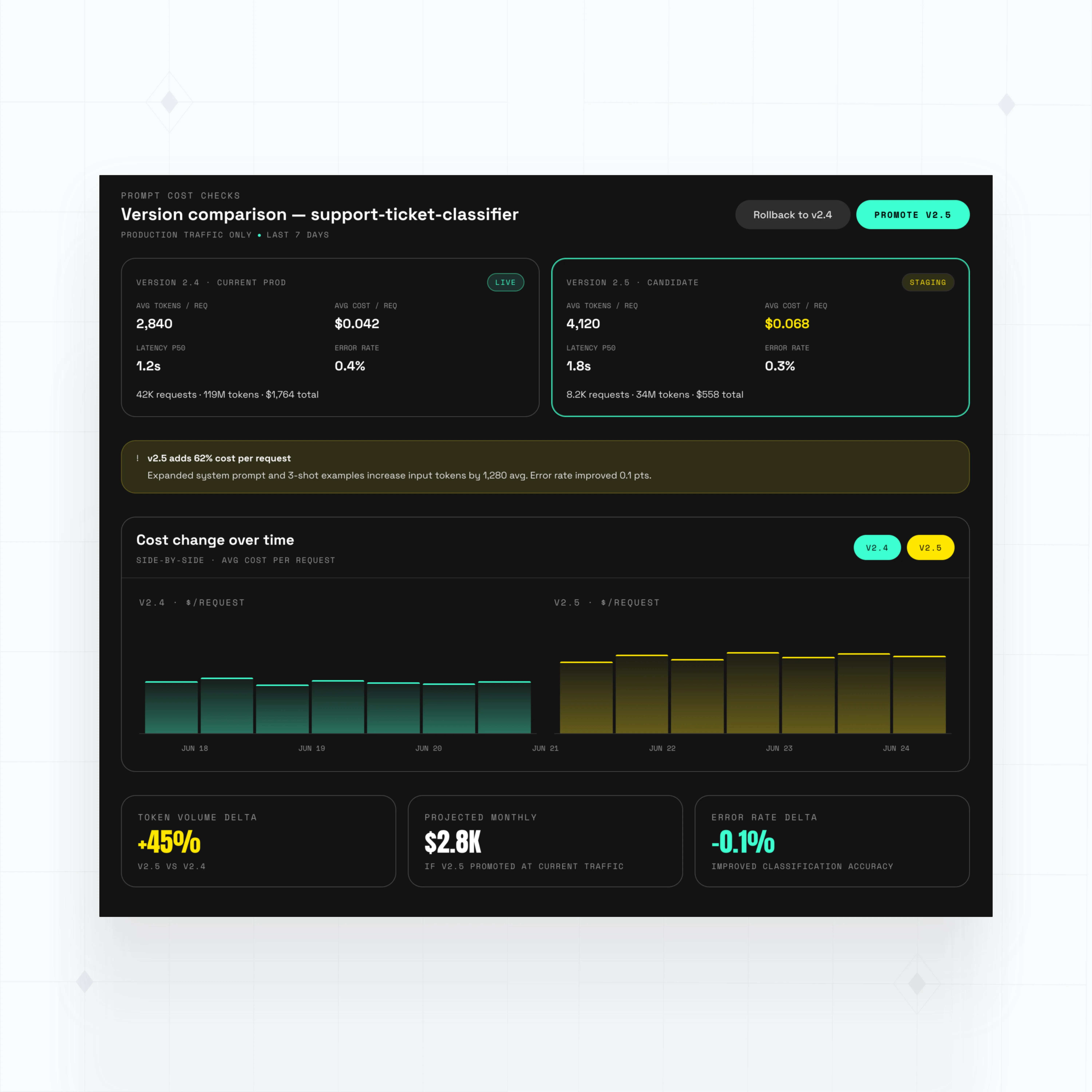
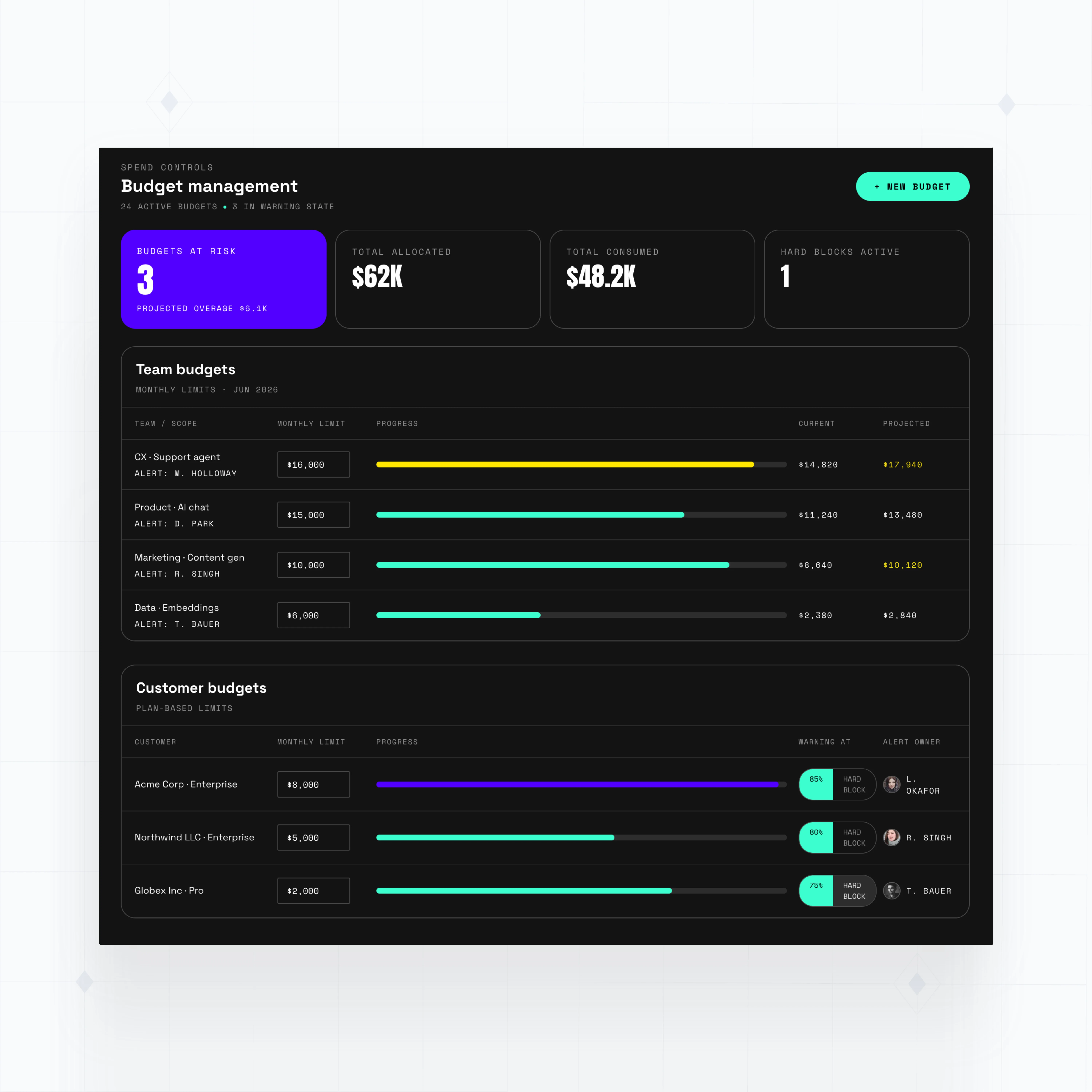
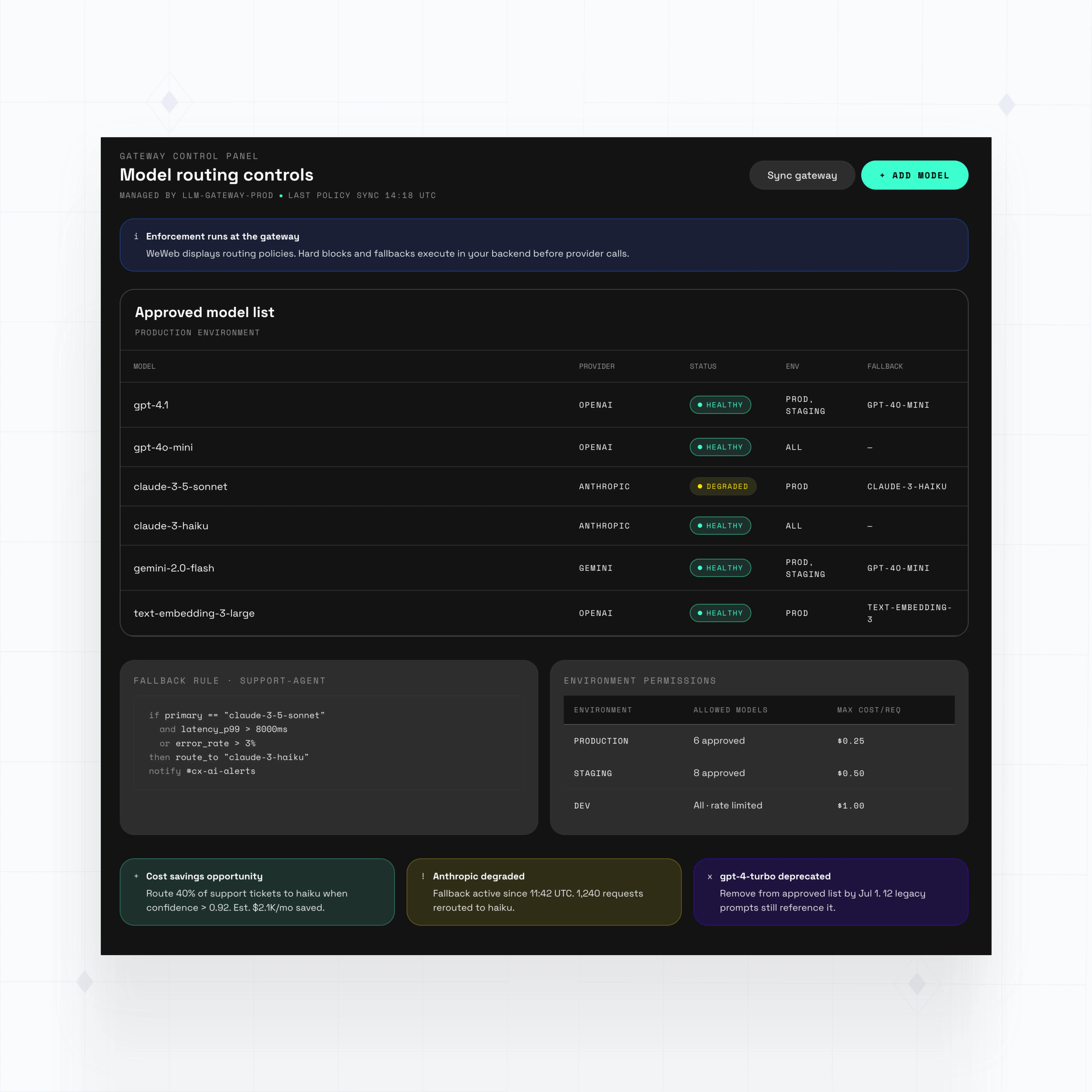
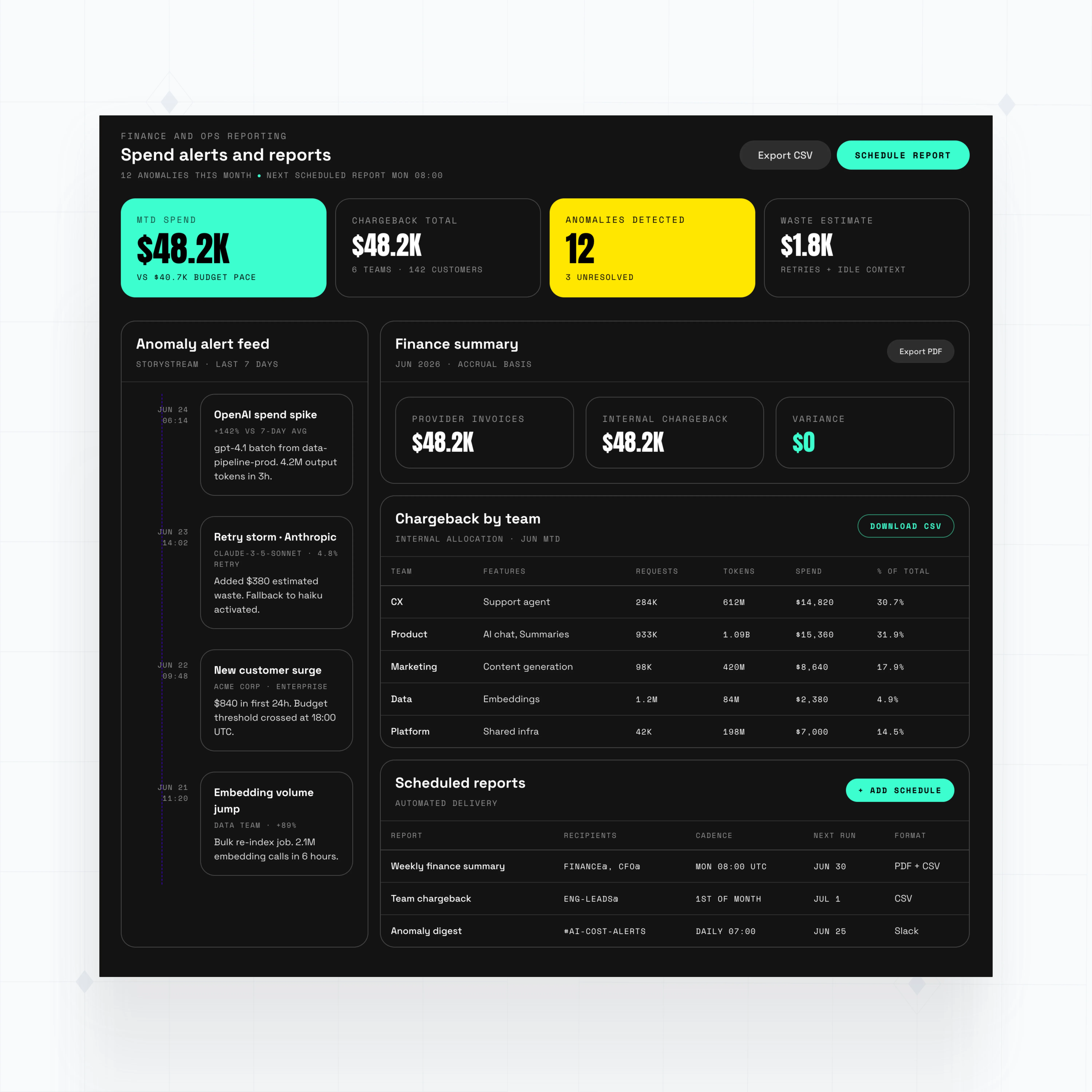
" It used to take a frontend developer, a backend developer, and a project manager. With WeWeb, I can build a new feature in about 90 minutes. I just get it done between meetings. "

Build the control layer your AI tokens need
The standards of code, with no-code.
Validate your token management system before usage spikes
With WeWeb, we can separate responsibilities more clearly. One person can focus on the backend, and another can work on the frontend without stepping on each other’s work.

FAQs
A token management system helps teams track, allocate, control, and report on AI token usage across products, customers, teams, workflows, and model providers.
As AI features grow, token usage becomes an operational resource. You need to know which app, user, customer, prompt, agent, API key, or environment is consuming tokens, and whether that usage fits the limits you set.
With WeWeb, you can build the dashboard and admin experience around token data from your backend, gateway, proxy, or SDK. Teams can monitor token volume, investigate spikes, manage quotas, and make usage decisions before token consumption turns into a cost or performance problem.
Yes, if your AI calls are logged in a consistent format. A token management system can normalize usage from providers like OpenAI, Anthropic, Gemini, Azure OpenAI, Bedrock, or any model API your backend supports.
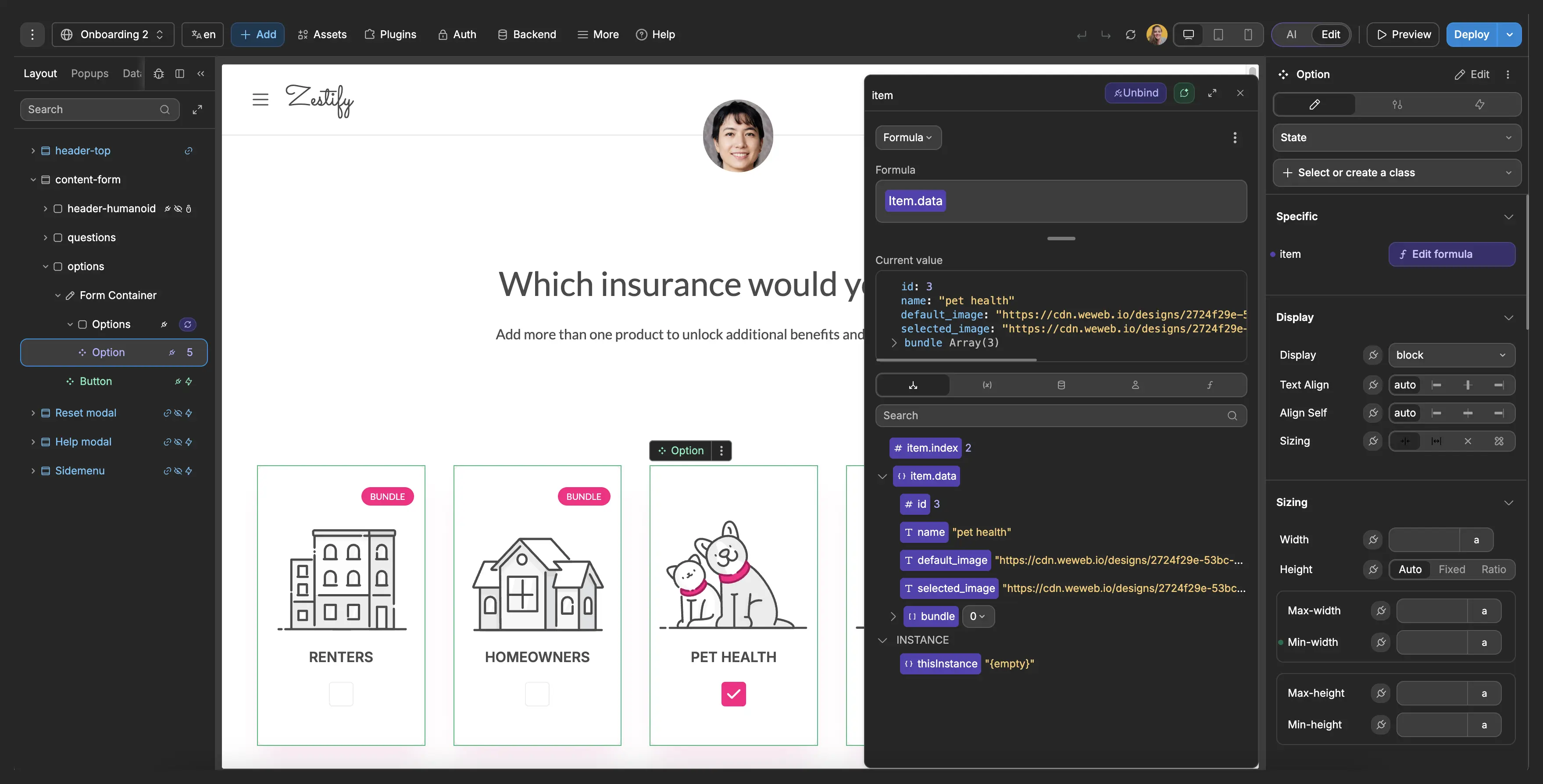
In WeWeb, you can connect to WeWeb Tables, Supabase, Xano, PostgreSQL, REST APIs, GraphQL endpoints, or a custom LLM gateway to show token usage across providers in one interface.
The important part is the data model. Store fields like provider, model, input tokens, output tokens, cached tokens, request ID, user, team, feature, customer, environment, and timestamp so the dashboard can show more than a raw usage total.
Yes. You can build quota views for the ownership model that matters to your product: users, teams, customers, workspaces, agents, product features, API keys, environments, or subscription tiers.
WeWeb can display quota status, remaining tokens, projected usage, monthly limits, warning thresholds, approval states, and blocked or throttled events. Your backend should enforce hard limits before model calls are made, while WeWeb gives operators and admins the control panel.
This split keeps the experience practical. Builders can manage token rules visually, and enforcement stays close to the system that routes, authenticates, or records AI requests.
Yes, if you design the architecture that way. Many token management systems only need metadata: token counts, provider, model, latency, request status, attribution tags, quota results, and timestamps. They do not need to store prompt text or model responses.
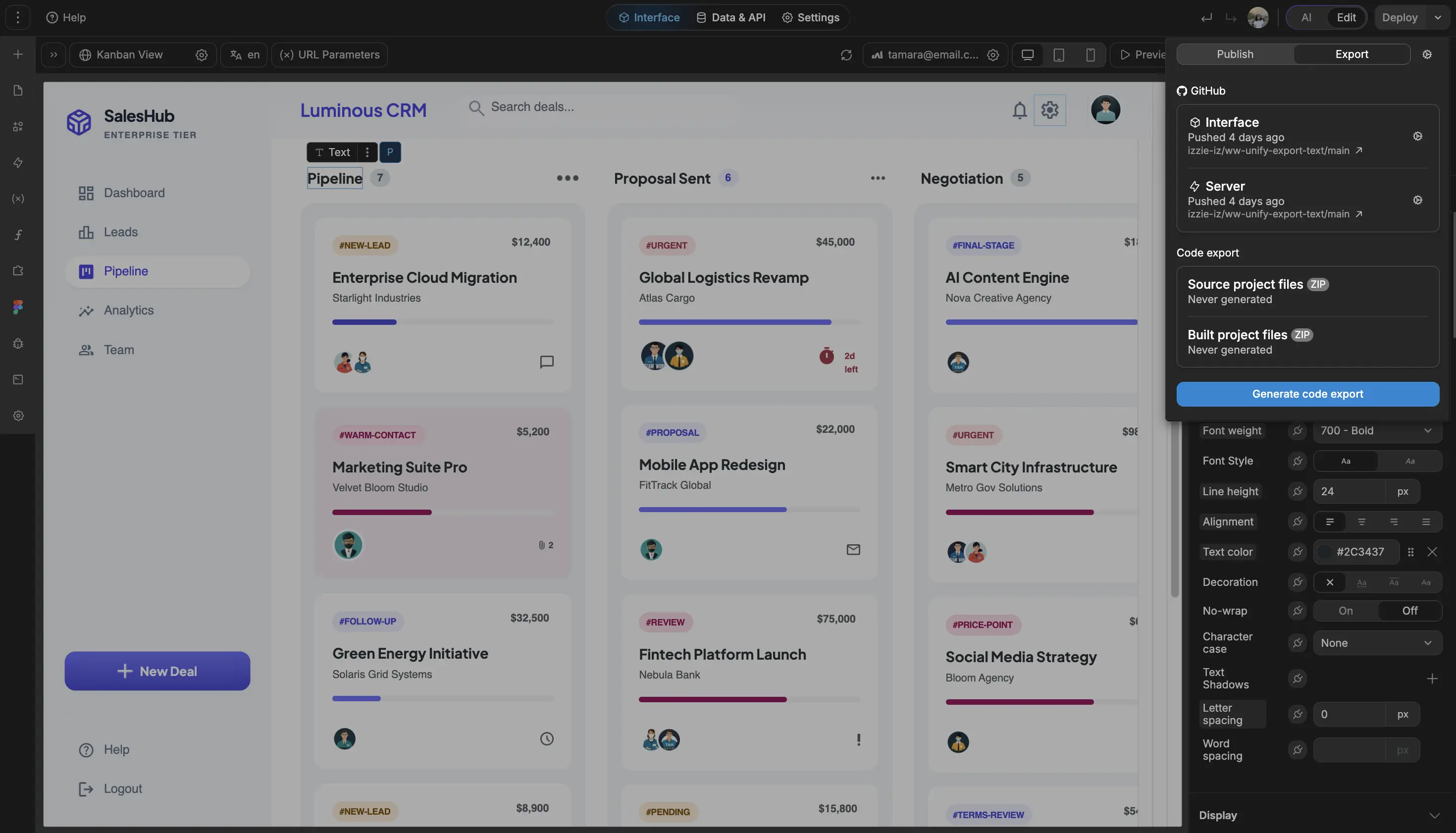
With WeWeb, you can build the frontend on top of a backend you control, then decide exactly what data is stored, what is masked, and which roles can see each view.
For sensitive AI workflows, keep provider keys, prompt content, customer data, and enforcement logic in your backend or gateway. Use WeWeb for the dashboard, forms, admin screens, alerts, approvals, and reporting experience.