Build a Custom Property Management App With AI and No-Code
Stop paying per door for features that don't fit your portfolio. WeWeb lets you create property management software around your actual workflow, whether you manage 5 units or 500.

Trusted by founders & Fortune 500s
Build the property management features your portfolio actually needs
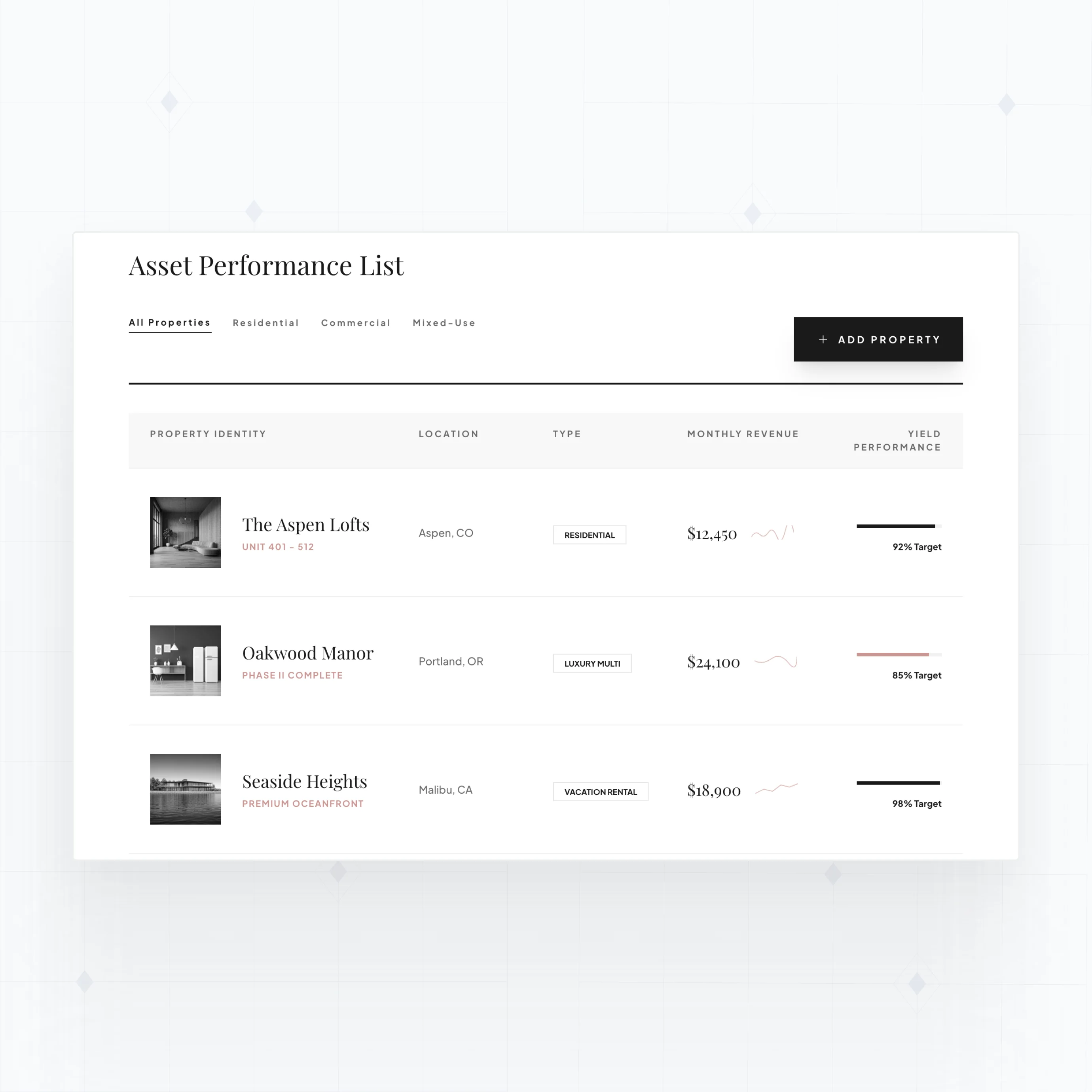
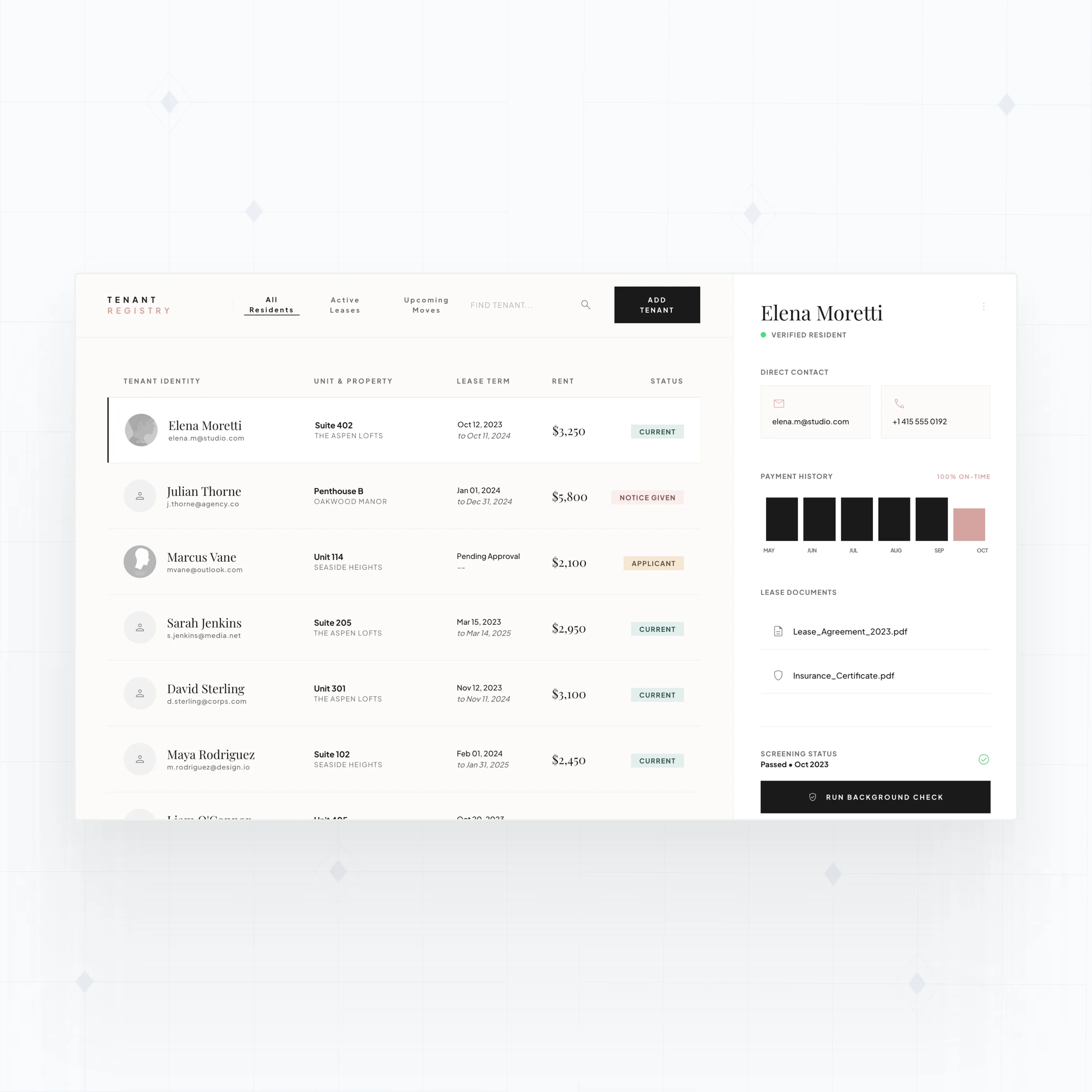
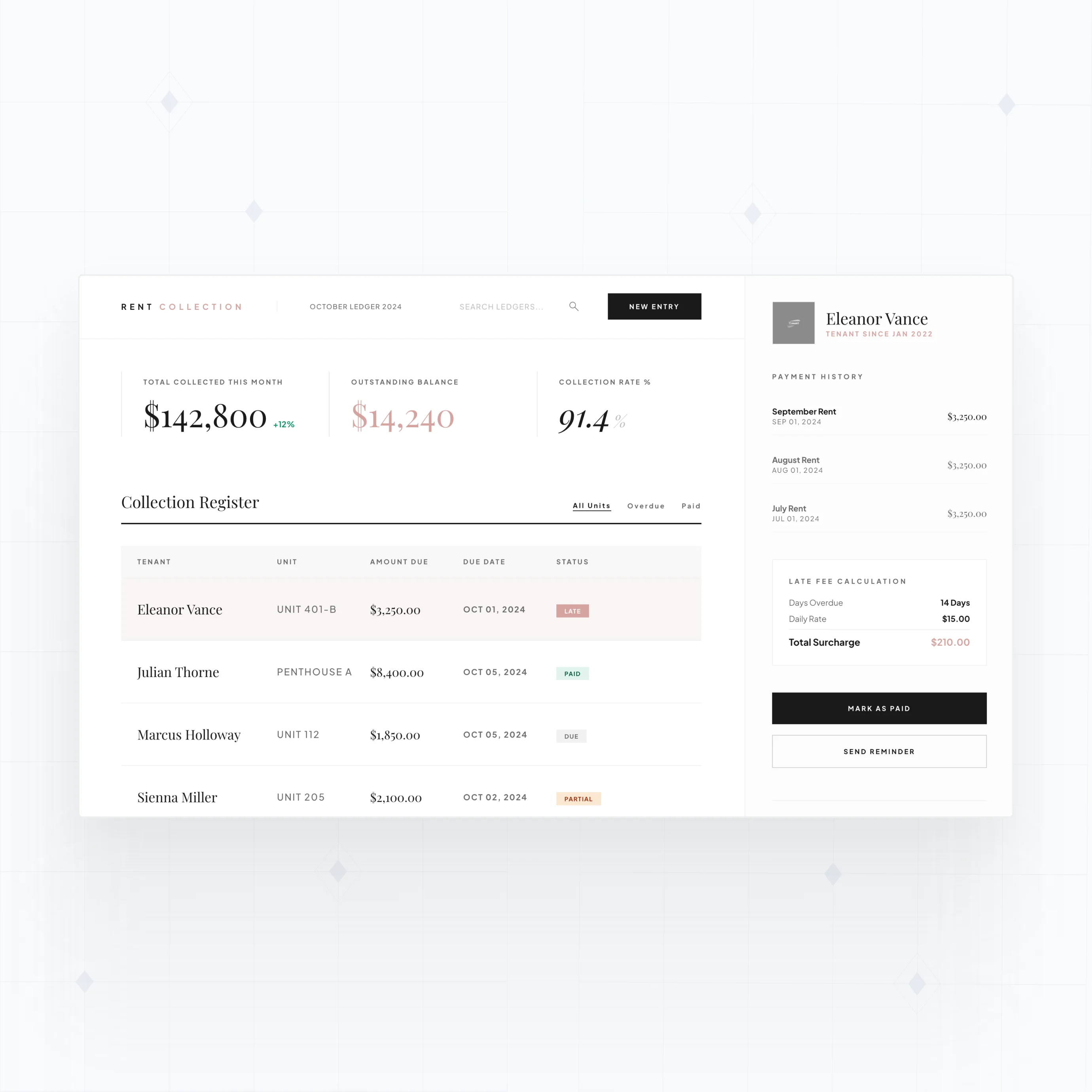
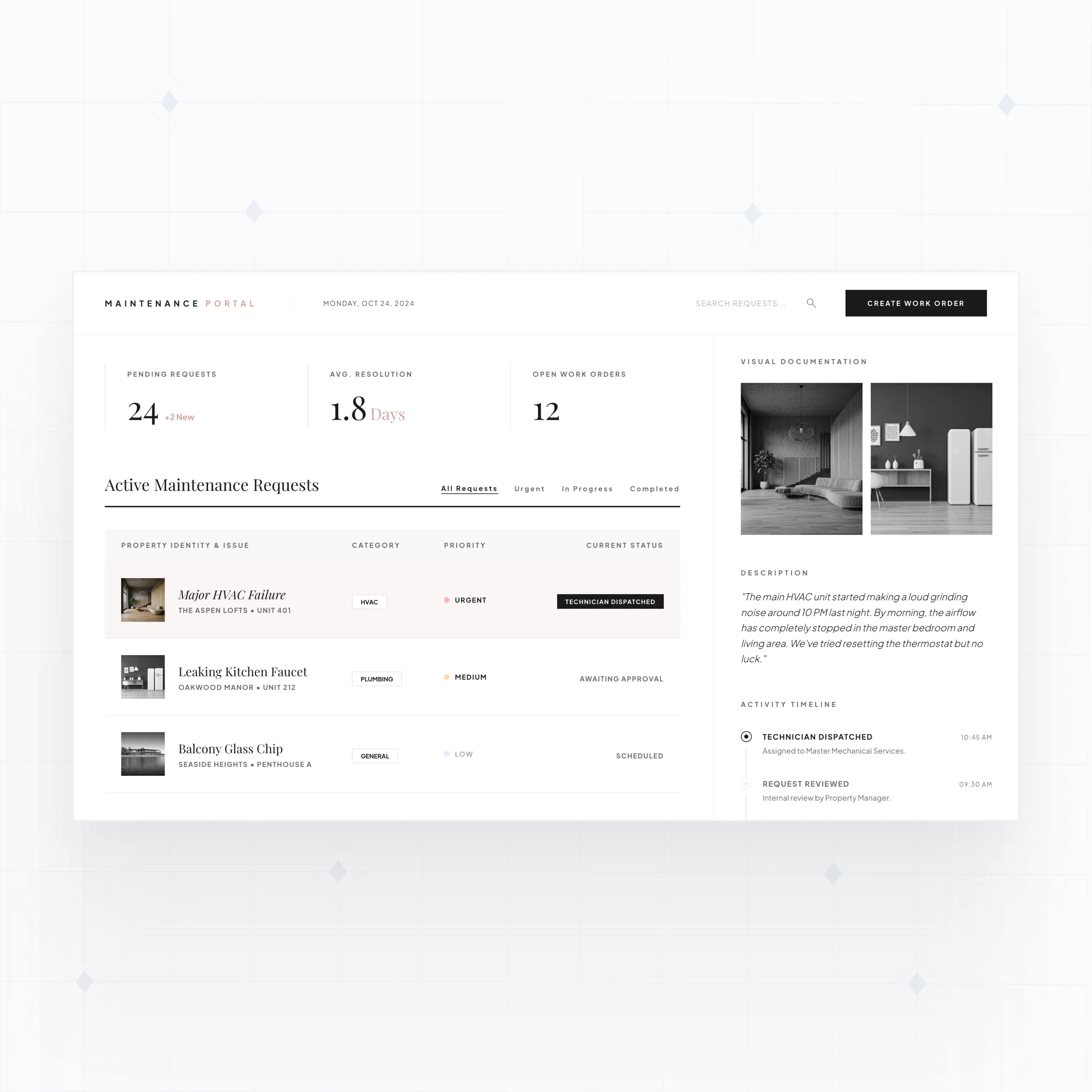
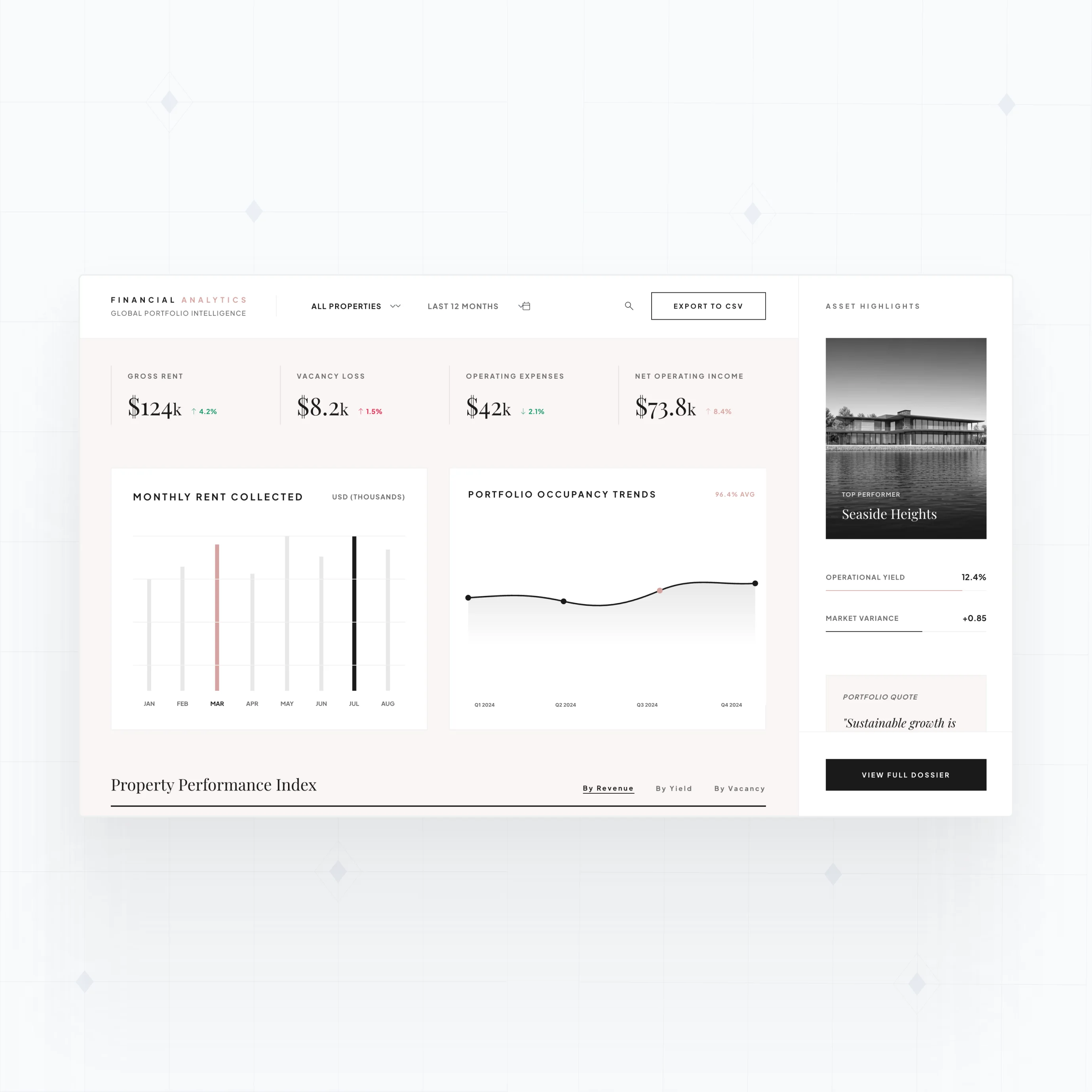
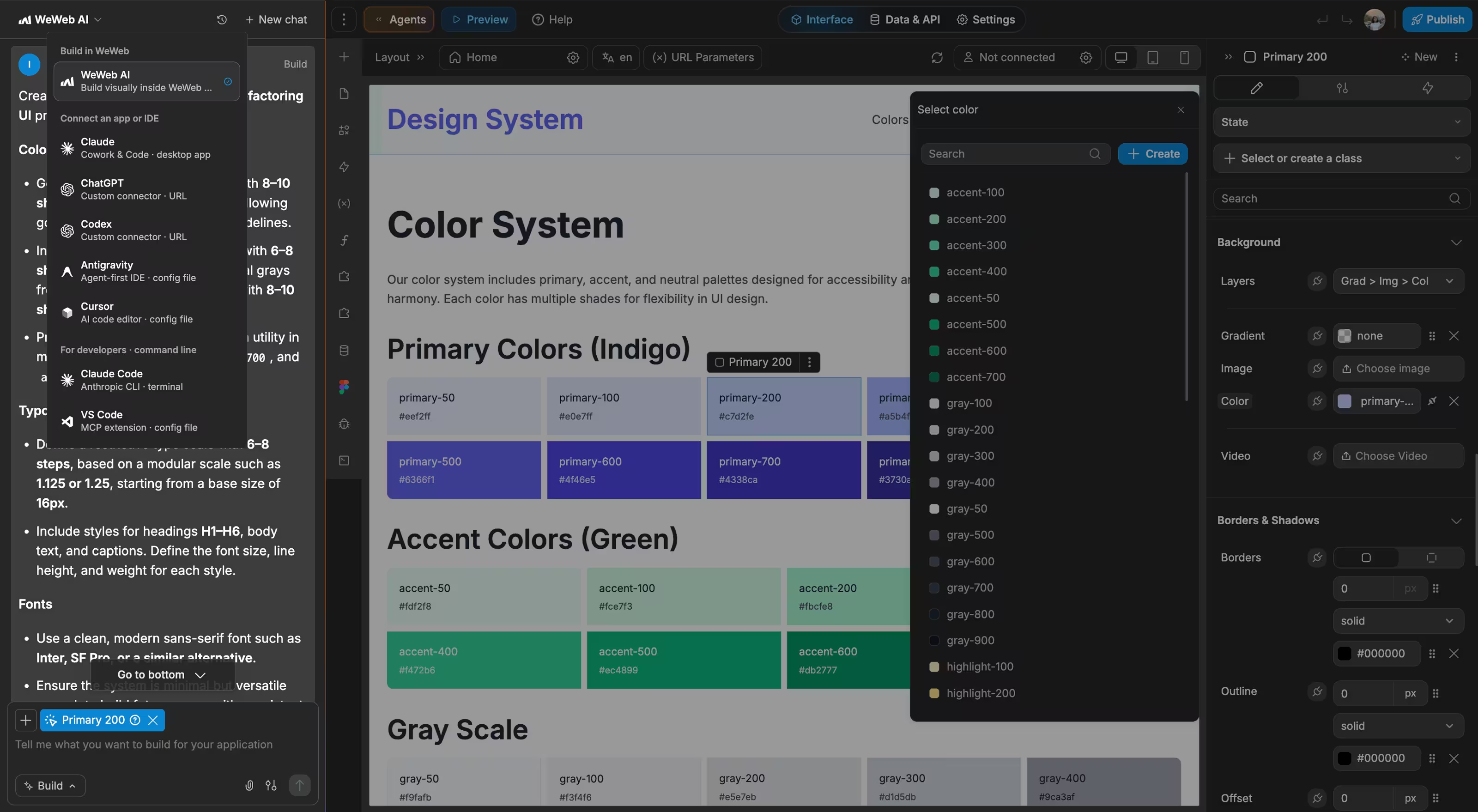
With WeWeb AI, design tenant portals, rent collection, and maintenance tracking that fits your property types and management style.
With WeWeb, we were truly able to achieve a pixel-perfect representation of our complex Figma designs.

Everything you need to ship property management software that scales with your portfolio
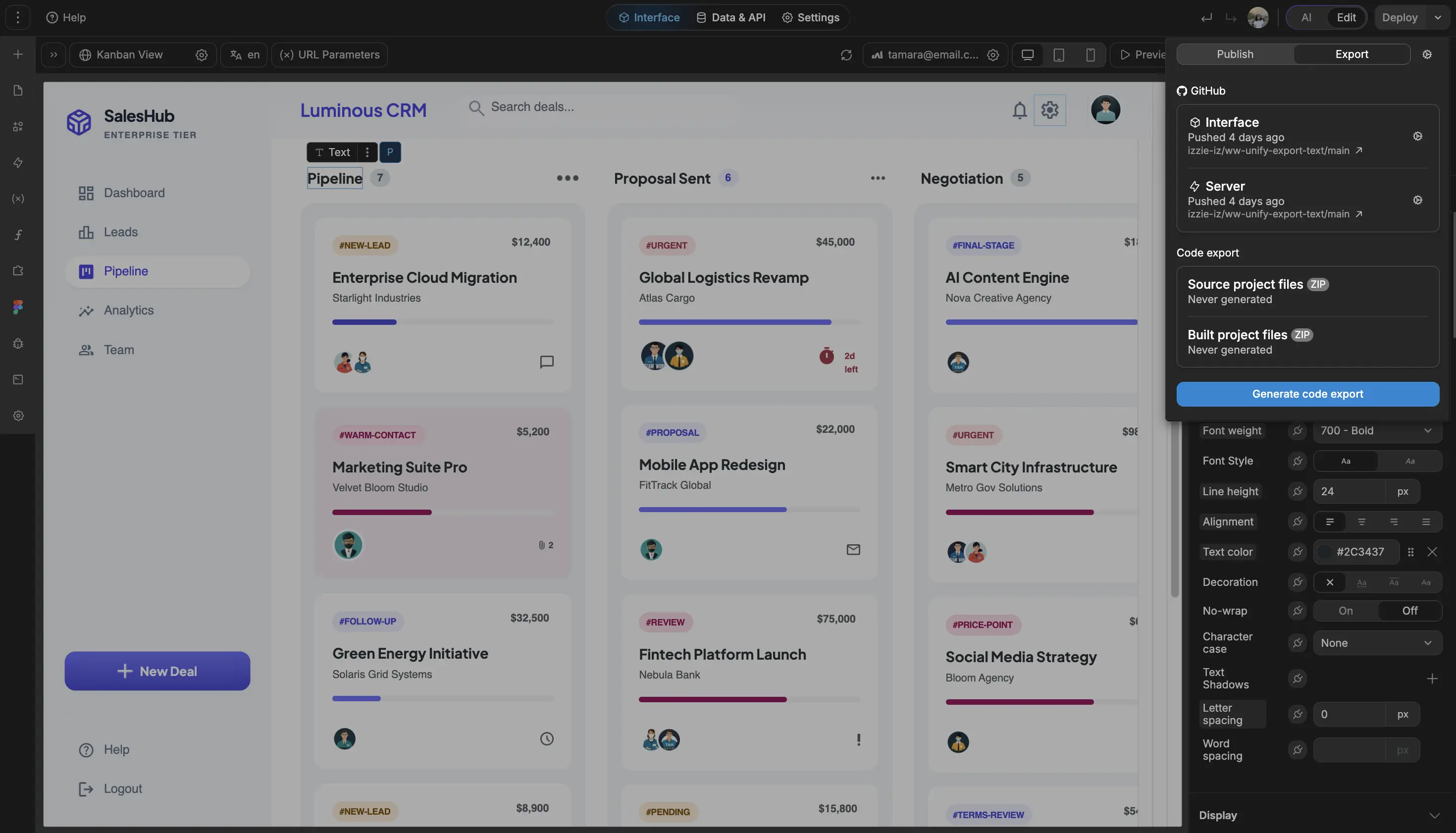
The standards of code, with no-code.
Launch your custom property management app this week
I kinda expected that I could only build a MVP using no-code, and then switch to developers and a fully-coded solution. But with WeWeb, I think I can scale endlessly.

FAQs
Off-the-shelf property management software works well for standard rental operations, but it creates friction in three common scenarios:
Per-unit pricing that scales poorly. Most property management platforms charge $1-15+ per door per month. For a 50-unit portfolio, that's $600-9,000 annually, and costs keep climbing as you acquire more properties. WeWeb doesn't charge per unit, so your 10th property costs the same as your 100th.
Minimum unit requirements. Many platforms require 50+ units to even use their software, locking out small landlords and growing portfolios. With WeWeb, you can start with a single property and scale without switching platforms.
One-size-fits-all workflows. Residential rentals, commercial properties, vacation rentals, and student housing all have different processes. Off-the-shelf tools force you into their predefined structure. A custom app mirrors how you actually manage properties.
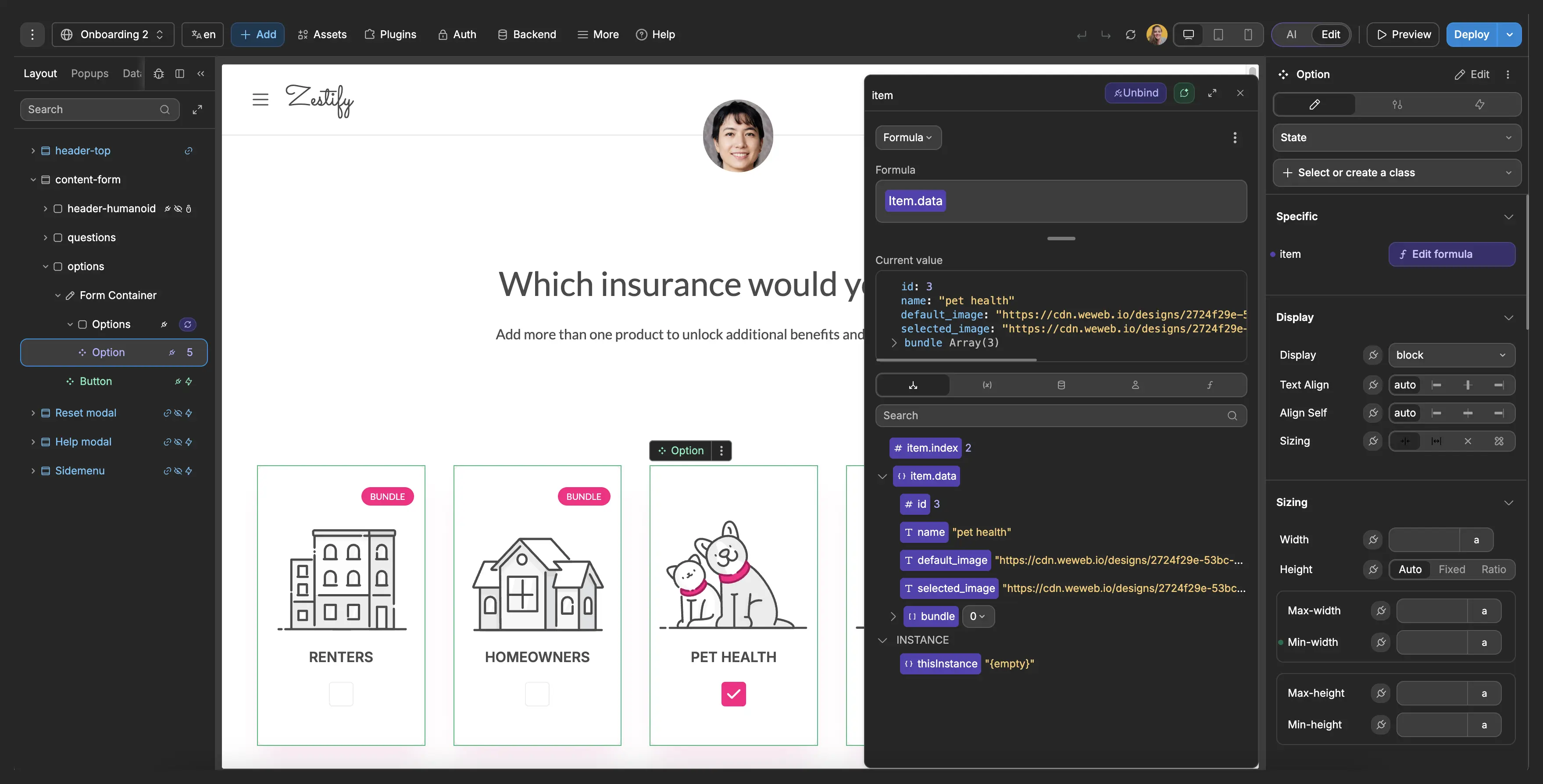
No. WeWeb is a visual development platform, so you build by dragging components, configuring data connections, and setting up workflows through a point-and-click interface.
WeWeb AI accelerates the process significantly. Describe what you need ("a property management app with tenant portal, maintenance requests, and rent tracking") and AI generates the foundation: pages, database schema, forms, and workflows. From there, you refine visually.
That said, WeWeb doesn't limit you if you do have technical skills. You can:
- Write custom JavaScript for complex calculations like prorated rent or late fee logic
- Build custom Vue.js components for specialized functionality
- Connect to any REST API or GraphQL endpoint
- Integrate with your existing accounting or banking systems
Start simple, add complexity as your needs grow.
Yes. WeWeb connects to any service with an API through the REST API plugin. Common integrations for property management apps include:
- Accounting: QuickBooks, Xero, FreshBooks (for income/expense tracking and invoicing)
- Banking: Plaid, Stripe (for rent collection and payment processing)
- Background checks: TransUnion, Experian API (for tenant screening)
- Communication: Twilio, SendGrid (for tenant notifications and reminders)
- Document storage: Google Drive, Dropbox (for lease agreements and property documents)
- Maintenance: Thumbtack API, vendor databases (for contractor dispatch)
Unlike off-the-shelf property management software that offers specific integrations, WeWeb lets you connect directly to any API. If your accounting software has an API, you can sync data automatically.
Yes. WeWeb supports role-based access control, so you can build separate views for landlords, property managers, and tenants within the same application.
Tenant portal features you can build:
- Online rent payment with payment history
- Maintenance request submission with photo uploads
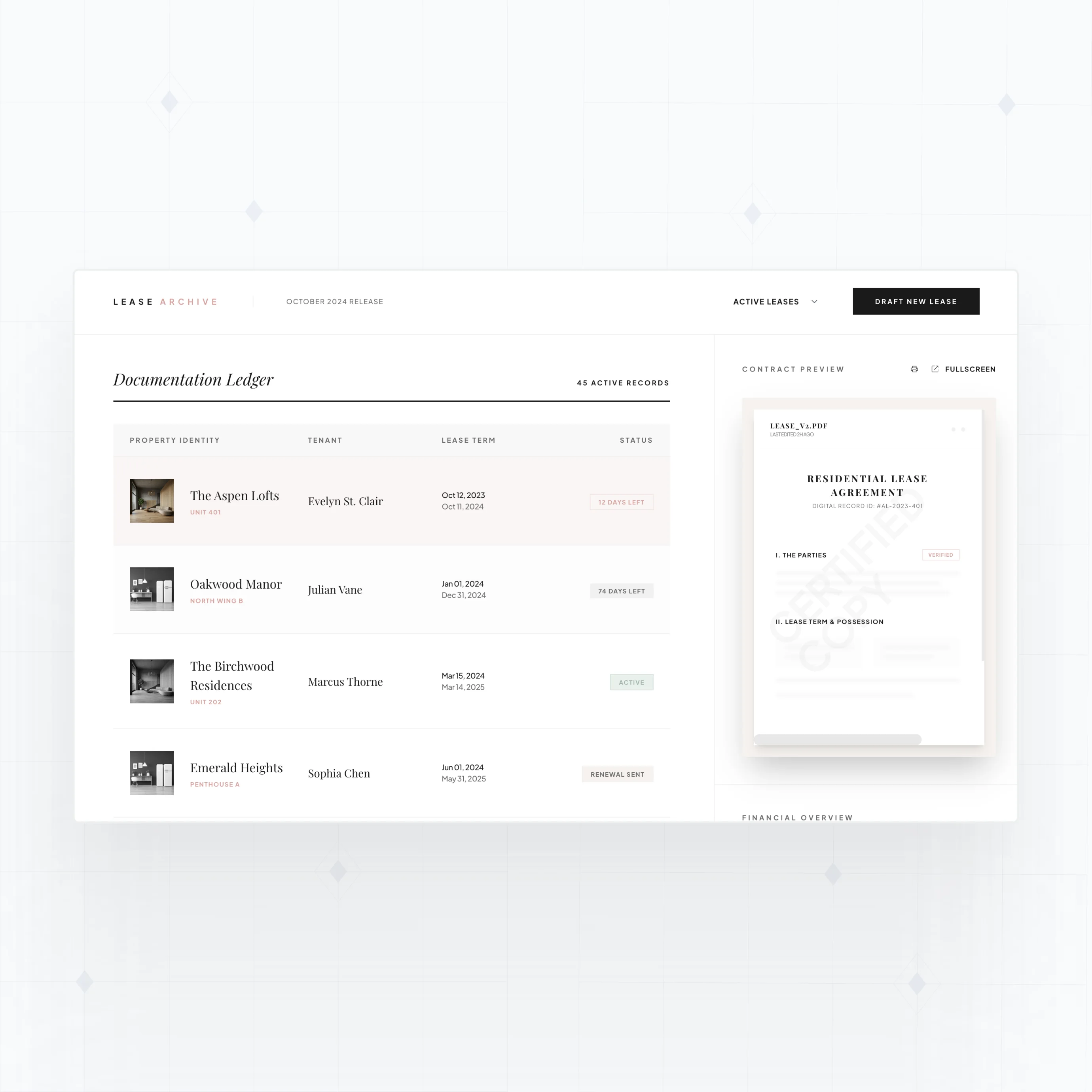
- Lease document access and e-signature
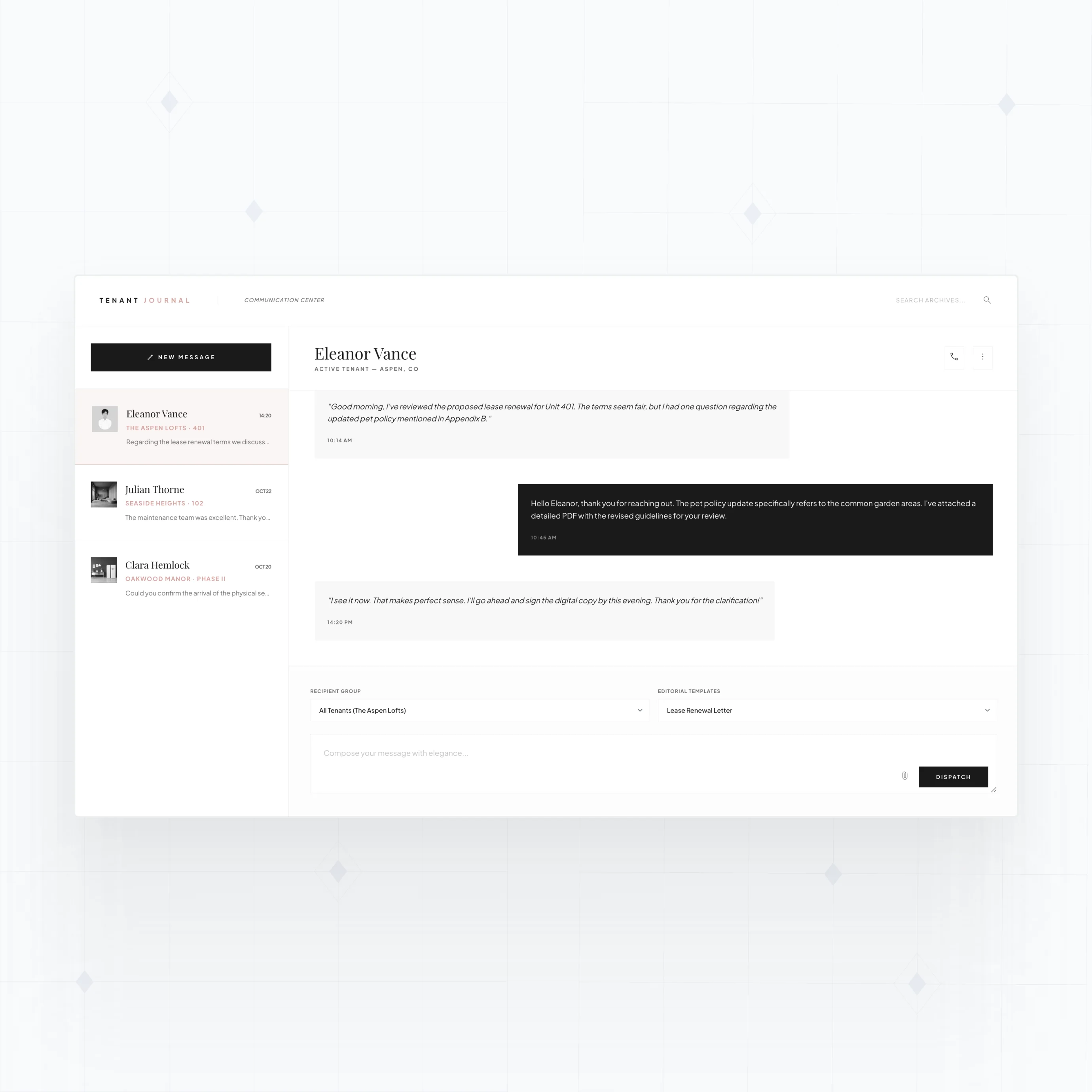
- Communication history with property management
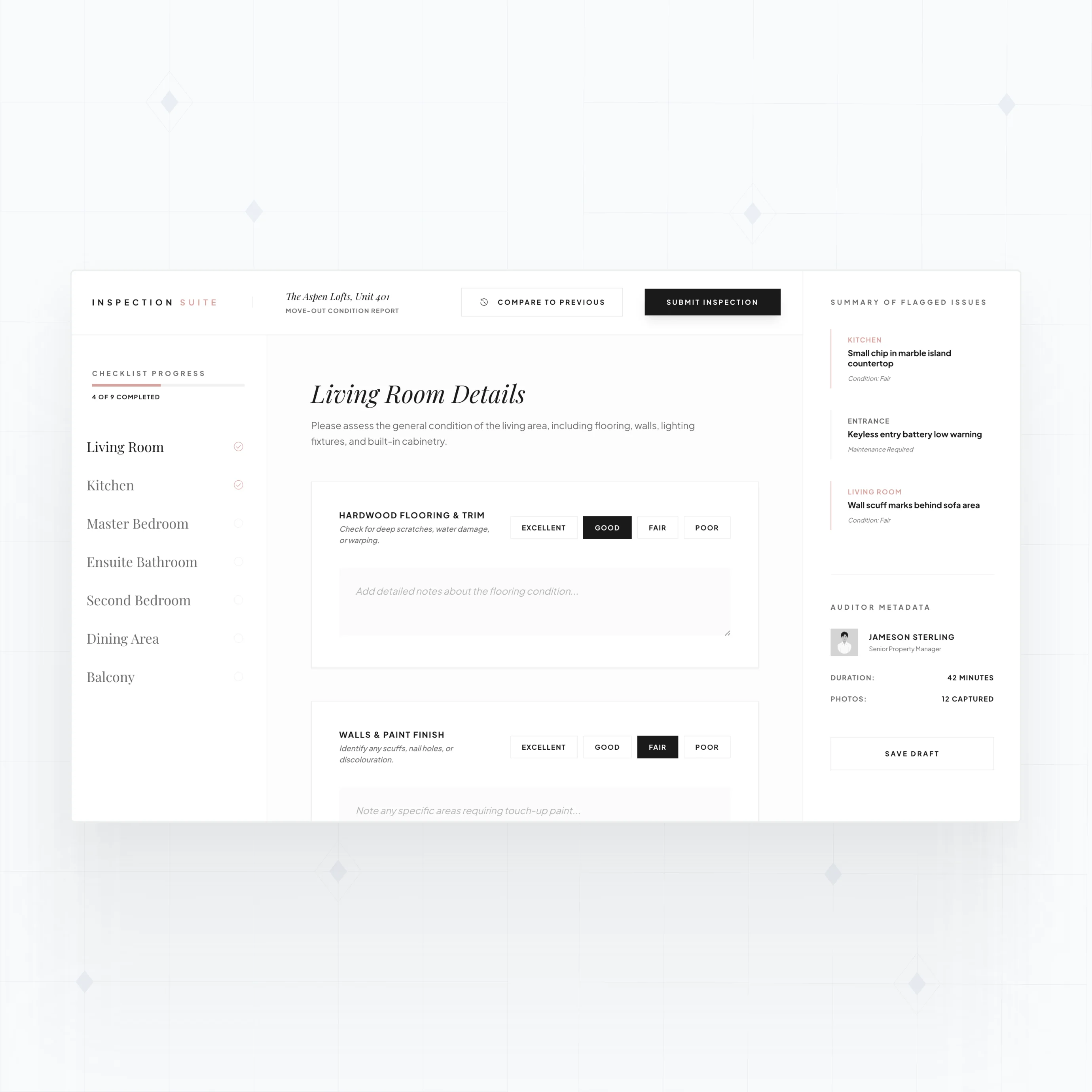
- Move-in/move-out inspection checklists
Security and access control:
- Tenants only see their own unit and payment history
- Authentication through WeWeb Auth, Supabase Auth, or your existing auth system
- Role-based permissions control what each user type can view and edit
You can design the tenant experience exactly as you want it, with your branding and your workflow, rather than settling for the portal a software vendor provides.