Build a Food Manufacturing ERP With AI and No-Code
Stop forcing recipes, batches, allergens, QC checks, and lot records into rigid ERP screens. WeWeb helps you build food manufacturing workflows around your production process.

Trusted by founders & Fortune 500s
Build food ERP modules around each batch
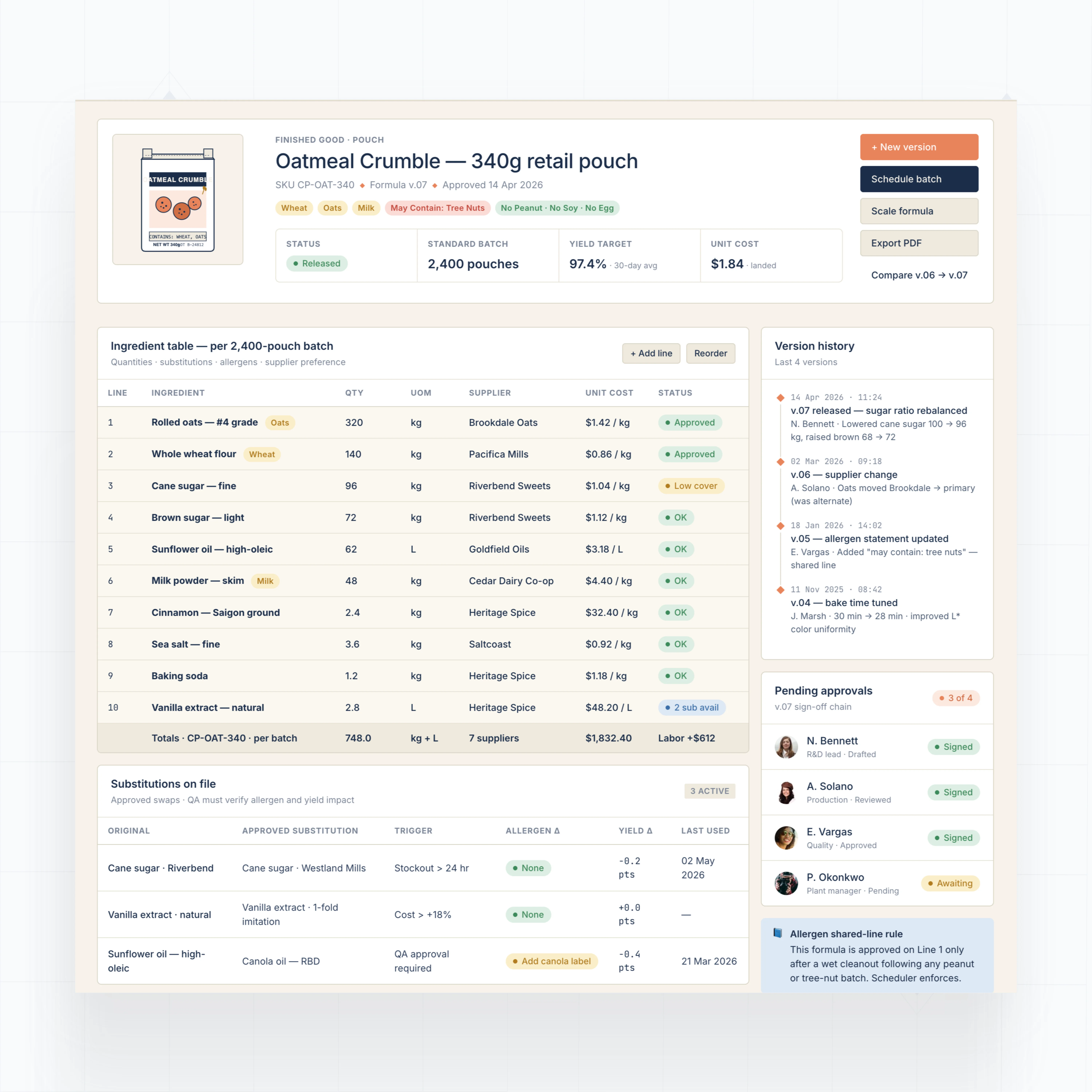
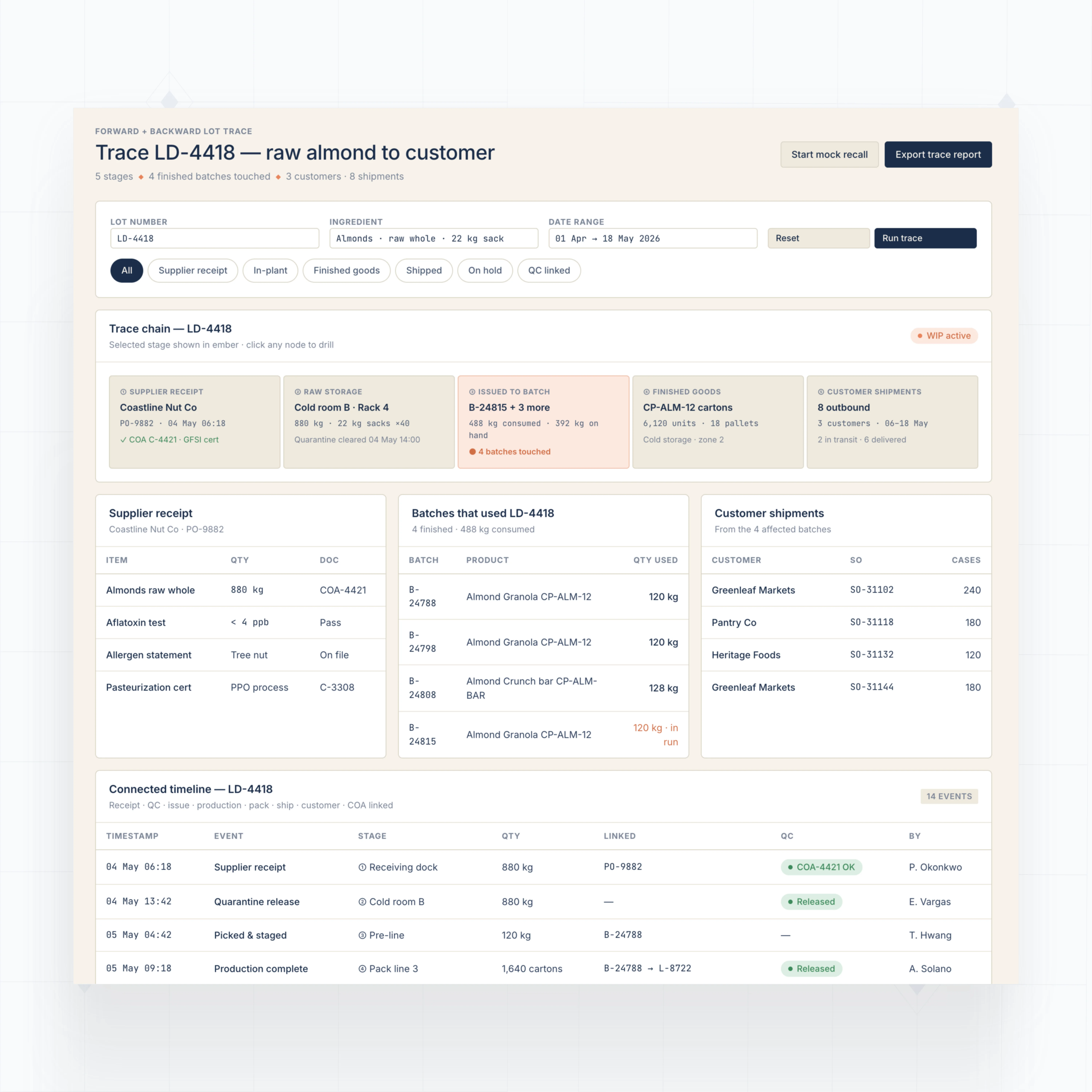
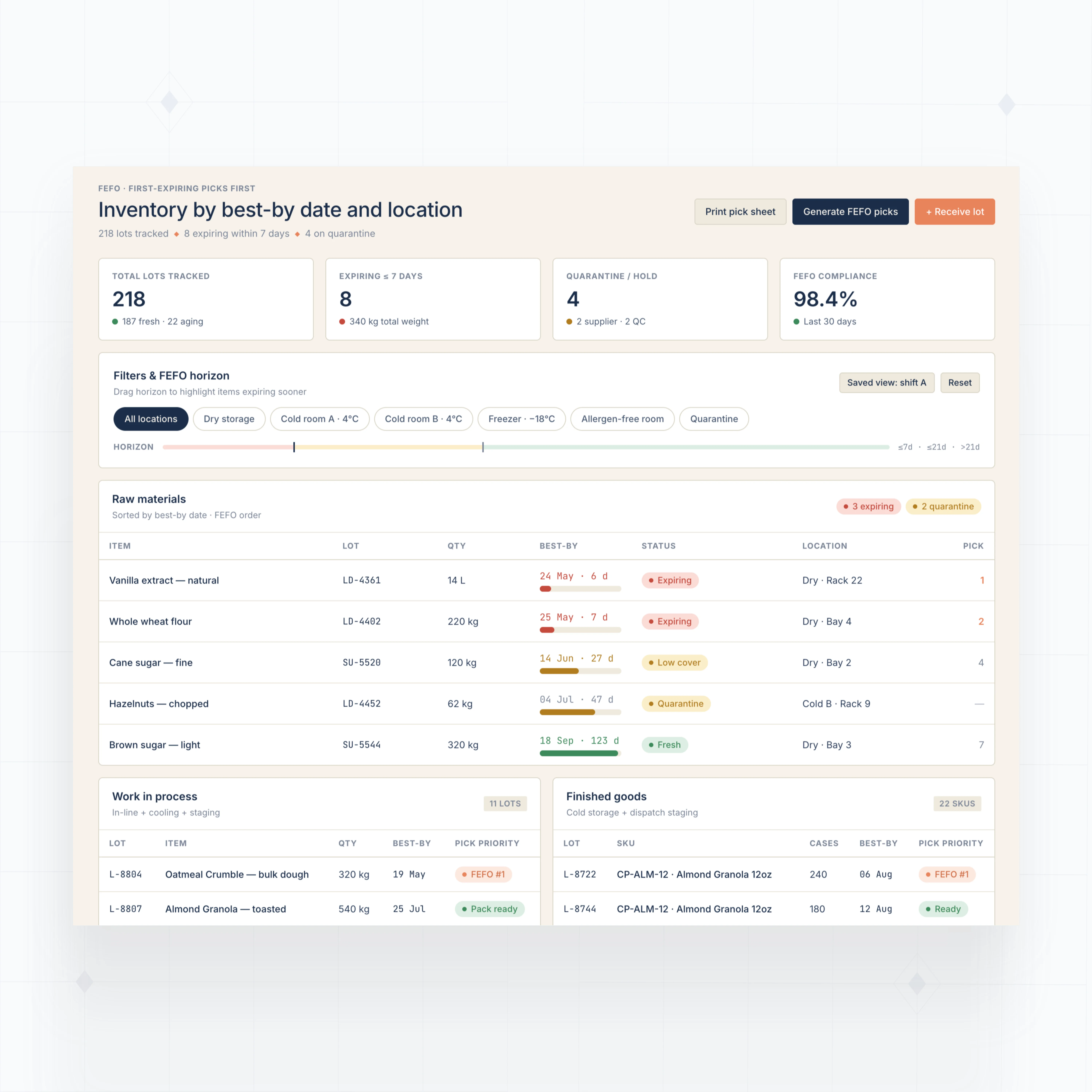
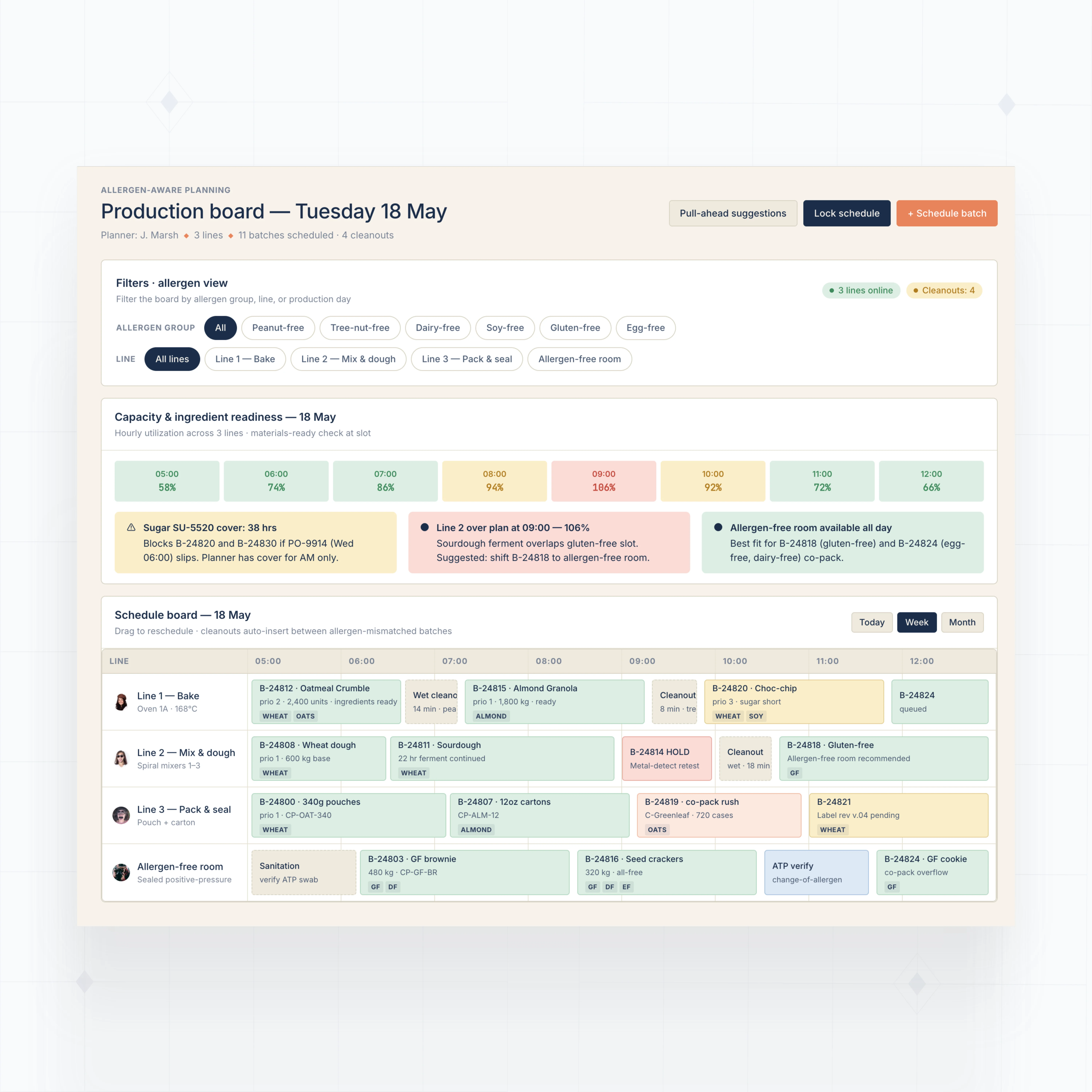
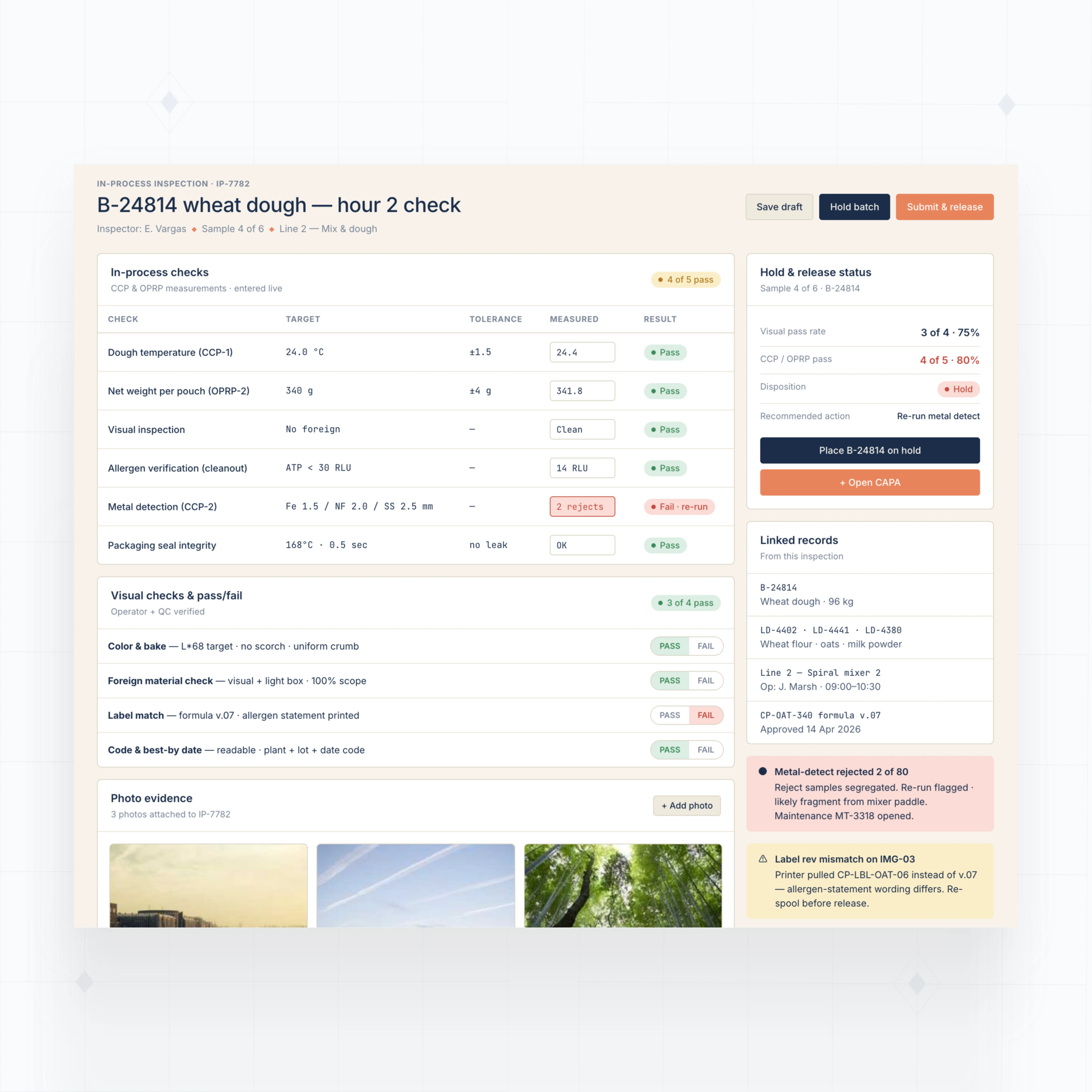
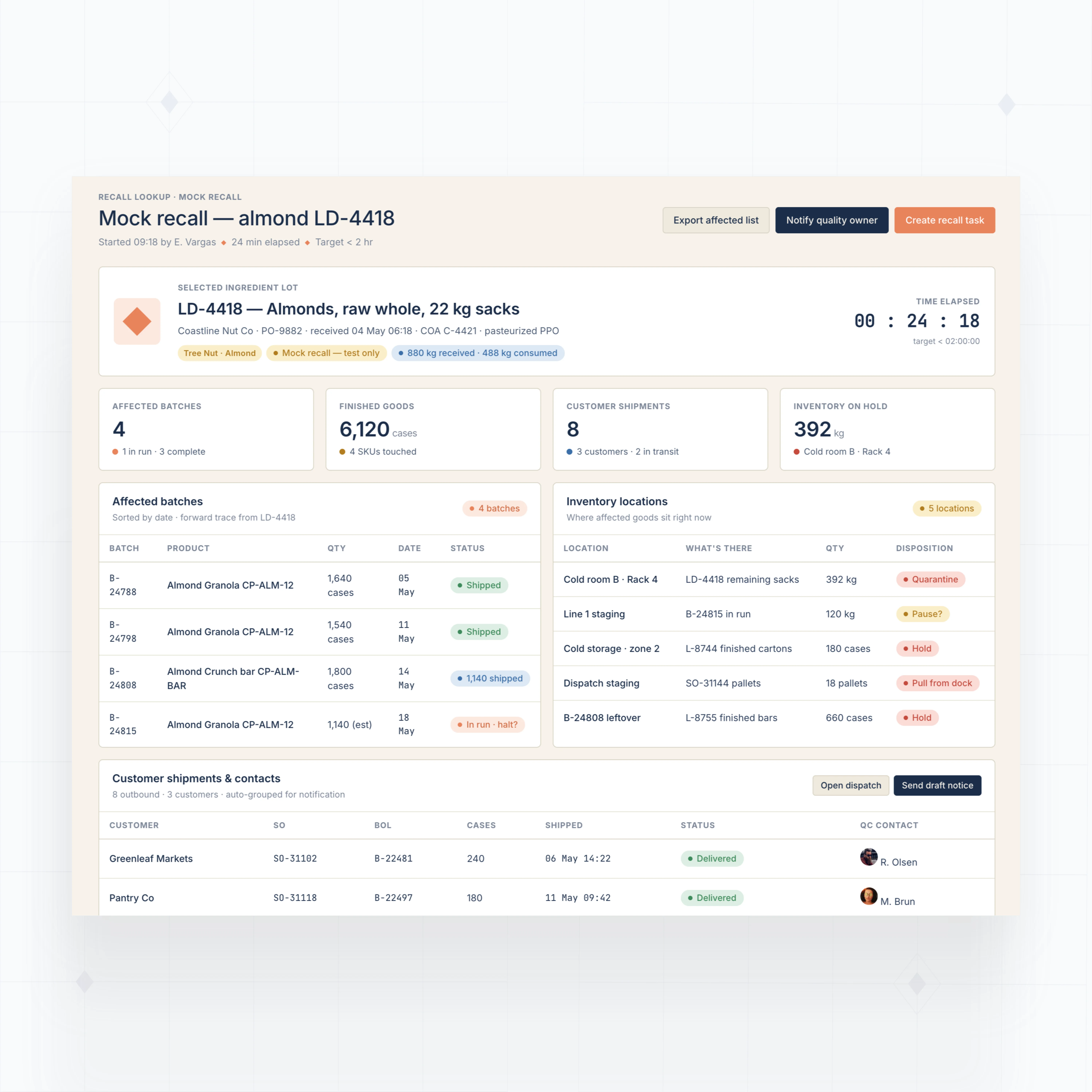
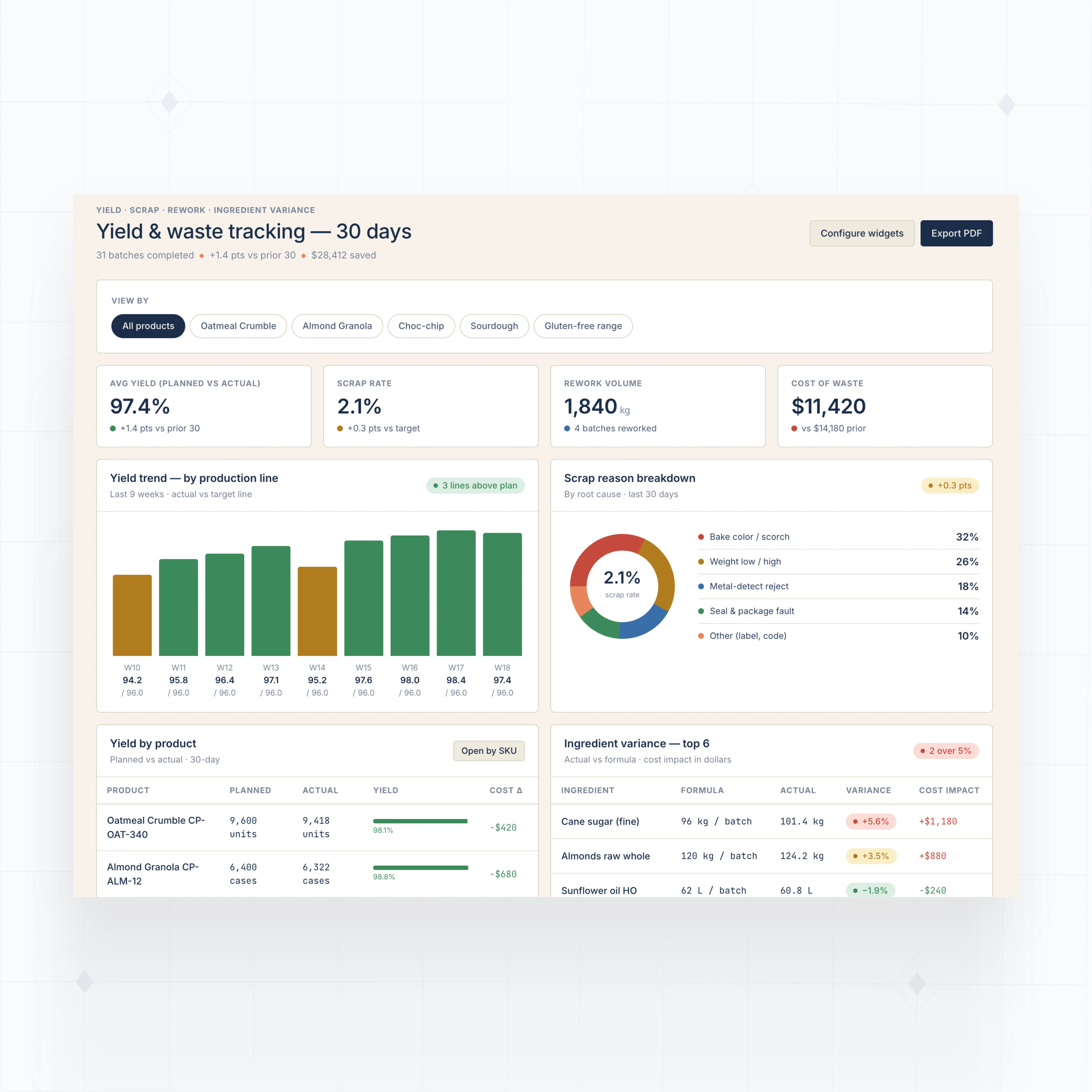
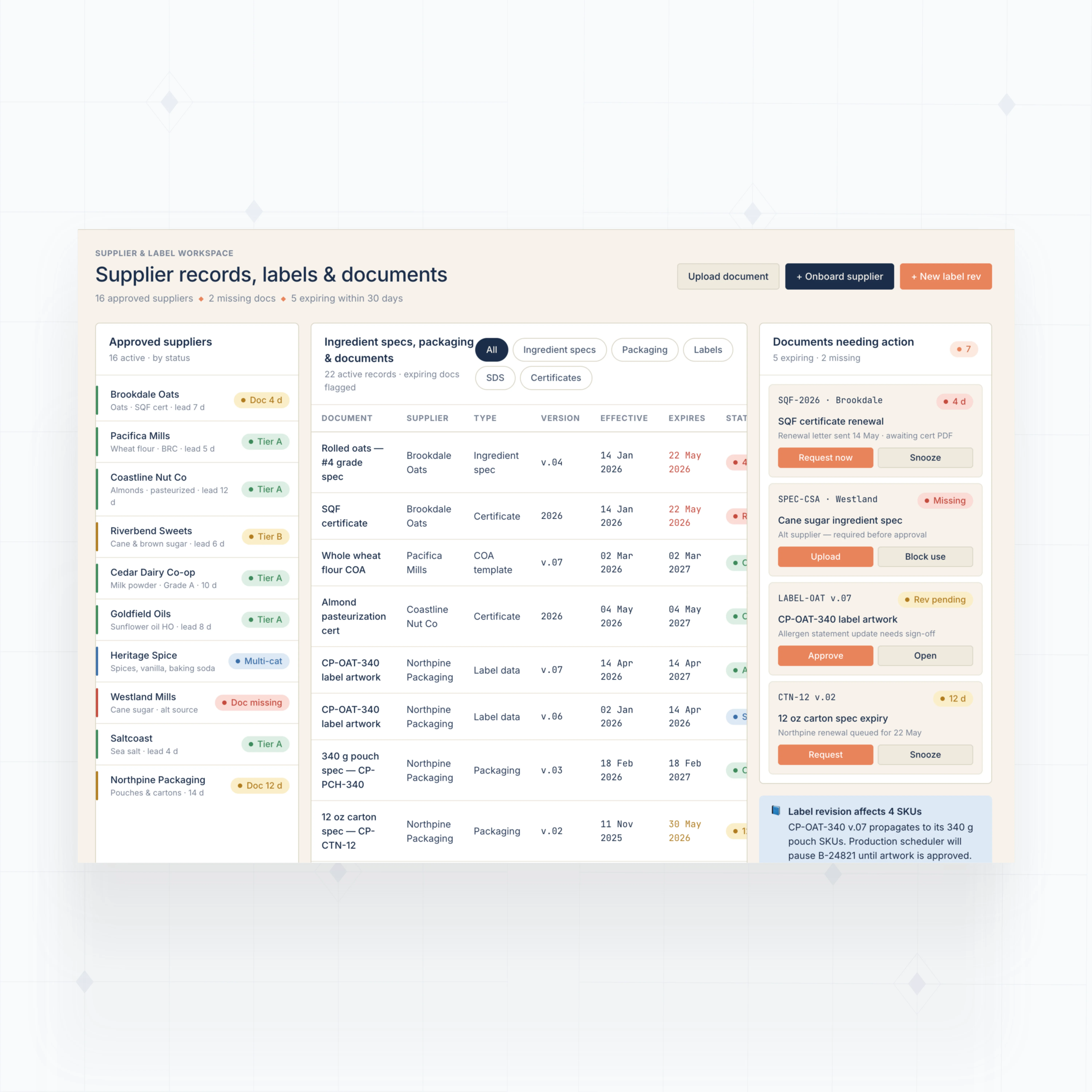
With WeWeb AI, build recipe control, batch tracking, FEFO inventory, allergen-aware scheduling, QC records, recall lookup, and production dashboards.
With WeWeb, we can separate responsibilities more clearly. One person can focus on the backend, and another can work on the frontend without stepping on each other’s work.

Production-grade infrastructure for food manufacturing ERP
The standards of code, with no-code.
Launch your first batch module this week
We knew this project would require a top-tier tool (like WeWeb) to handle the scale of a nationwide broadcast and meet TF1’s strict requirements. They wanted full control over hosting and infrastructure, with no dependency on proprietary platform servers.

FAQs
Standard food manufacturing ERP works best when your process already matches the vendor's model. Many food producers need more specific workflows for formulas, batches, allergens, expiration dates, QC checks, substitutions, yields, and recall records.
The issue is fit, not just feature coverage. A bakery, beverage producer, supplement manufacturer, or frozen food plant may all need ERP, but each one handles recipes, packaging, storage, labeling, and quality differently.
With WeWeb, you can build the operational modules you need first and connect them to your backend, inventory system, accounting tool, or production database. WeWeb AI can generate the first version, then your team can refine screens, fields, permissions, and workflows visually.
Yes, if your backend data model captures the right lot, batch, supplier, production, shipment, and customer relationships. WeWeb can provide the application layer your team uses to search, update, and act on that data.
You can build forward and backward lot lookup screens, batch records, supplier receipt views, shipment history, mock recall workflows, and dashboards that show affected ingredients, finished goods, customers, and inventory locations.
WeWeb does not make a food business compliant by itself. It helps you build the interfaces and workflows that support traceability, documentation, and recordkeeping when paired with the right backend, controls, and operating process.
Yes. You can build recipe and formula workflows that track versions, ingredient quantities, substitutions, allergens, packaging notes, production instructions, and approval status.
For production, the app can scale formulas by batch size, show the active formula version, capture actual ingredient usage, and flag yield variance. For allergens, you can design screens that make allergen groups, cleanout requirements, and scheduling constraints visible before a batch is released to production.
Those rules should be backed by a reliable database and permission model. WeWeb gives your team the front-end workflows to review, update, approve, and use those records in daily operations.
Yes. Food manufacturing apps often need different screens for operators, warehouse teams, quality, production managers, and executives. The best interface for a line operator is not the same as the best interface for finance or quality leadership.
With WeWeb, you can create role-based views for batch instructions, ingredient picking, QC checks, hold and release status, inventory moves, sanitation tasks, and dashboards. Operators can use focused tablet-friendly screens, while managers see production, yield, inventory, and quality trends.
WeWeb does not charge per app user, so you can roll the app out to production, warehouse, and quality teams without every additional user changing your WeWeb bill.