




In any growing company, information can feel scattered.
Employees hunt through emails for policy updates, message HR for a pay stub, and ask colleagues where to find the expense form.
This daily scavenger hunt wastes time and creates frustration. The solution is a modern employee portal, a centralized digital hub that transforms how your team works.
An employee portal acts as the digital front door to your company. It’s a secure, private website where staff can access everything they need, from company news and HR documents to self service tools for managing their own information.
Instead of a dozen different systems, everything lives in one place, streamlining operations and empowering your team.
This guide explores the essential features of a great employee portal and explains why it’s no longer a nice to have, but a must have for efficient, people focused businesses:
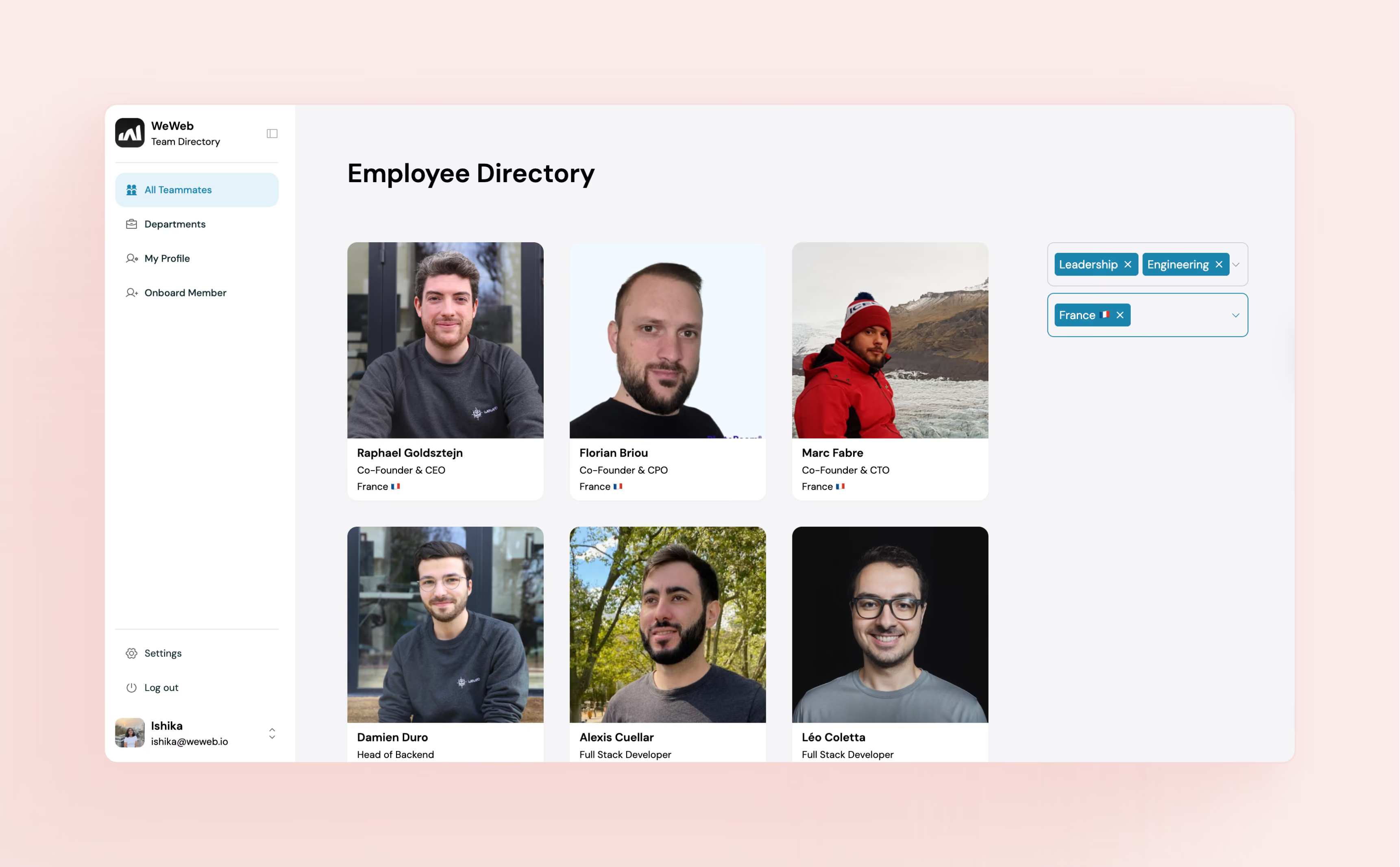
What Exactly Is an Employee Portal?
An employee portal, sometimes called an HR portal or self service portal, is a secure online platform that gives employees a single point of access to company information and services.
The goal is to make life easier for everyone. Employees get quick answers and can handle routine tasks themselves, while HR and admin teams are freed from repetitive queries.
By enabling self service, companies slash the administrative burden on HR, which can otherwise consume a significant amount of their time.
The impact is significant. Centralizing communication and resources in an employee portal can dramatically improve operations.
Modern platforms, also known as Employee Self Service (ESS) platforms, have evolved from simple document storage into comprehensive workforce management solutions.
With a well designed employee portal, your HR team can focus on strategic initiatives instead of manual paperwork.
In fact, organizations with high employee engagement are 23% more profitable than those with lower engagement levels.
Modern platforms make creating a tailored experience easier than ever. With a no code web app builder like WeWeb, companies can build a production grade, custom employee portal in minutes, giving their teams a unified platform without writing a single line of code.
Types of Employee Portals
Employee portals are not one size fits all. They can be tailored to meet specific organizational needs. Common types include:
- HR and Administrative Portals: These are the most common, focusing on automating tasks like payroll, benefits administration, and leave requests. They empower employees to manage their personal data, reducing the HR workload.
- Communication and Collaboration Portals: Designed to enhance teamwork and information flow, these portals act as a central hub for company news, announcements, and project collaboration. They often include features like discussion forums and team workspaces.
- Onboarding Portals: A specialized portal that guides new hires through the initial stages of their employment. It provides a centralized place to complete paperwork, access training materials, and learn about the company culture, ensuring a smooth transition.
- Comprehensive or All in One Portals: This type combines features from all other categories. It serves as a single, unified digital workplace for everything from HR tasks and document management to company wide communication and learning.
Core Features of a Modern Employee Portal
A truly effective employee portal is more than just a document library. It’s an interactive hub that integrates various aspects of the employee experience.
Seamless Onboarding and Offboarding
A dedicated onboarding portal makes new hires feel welcome and prepared from day one. It provides a structured journey where they can access welcome resources, complete necessary forms like the I-9 and W-4, and understand company policies before they even start.
This structured process improves retention and helps new employees become productive faster.
Centralized Employment Information
Employment information includes all the personal and job related data a company holds for an employee: name, address, job title, manager, and tax forms.
An employee portal gives each person a profile where they can view and manage this data.
Allowing employees to update their own address, bank details, or emergency contacts through self service not only empowers them but also boosts data accuracy.
If you store HR records in Airtable, connect your portal via the Airtable integration to read and write employee data securely.
Easy Access to Pay and Compensation
Transparency around pay is crucial for building trust. An employee portal provides a secure and private space for employees to access their compensation details anytime. Key features include:
- Viewing and downloading current and past pay stubs.
- Accessing annual tax documents.
- Reviewing salary history and compensation statements.
When employees can easily find this information without having to ask for it, it fosters a sense of fairness and clarity. If your payroll data lives in Sheets, you can surface it safely using the Google Sheets integration.
Managing Employee Benefits
Employee benefits are a critical part of total compensation, covering everything from health insurance and retirement plans to wellness programs. An employee portal demystifies benefits by:
- Providing clear explanations of all available plans.
- Offering tools to compare different options.
- Allowing employees to enroll or make changes during open enrollment periods.
Streamlining Employee Leave
Managing time off, whether for vacation, sickness, or family matters, should be simple. An employee portal typically includes a leave management module where employees can:
- Request paid time off.
- Check their remaining leave balance.
- View a shared team calendar to coordinate schedules.
Automating this process removes administrative headaches and provides a clear, consistent system for everyone.
A Hub for Document Management
Employees spend a shocking amount of time just looking for information. According to a McKinsey report, employees spend an average of 1.8 hours every day—or 9.3 hours per week—searching for and gathering information. An employee portal solves this by creating a central resource center or knowledge base for essential documents. This is where you can securely store and manage materials like:
- The employee handbook
- HR policies and procedures
- IT support guides and tutorials
- Templates and forms
- Employment contracts and certificates
A robust document management system ensures that employees can find up to date information quickly, boosting productivity and reducing interruptions.
Communication and Collaboration Tools
An employee portal breaks down communication silos by providing a single platform for teams to connect.
Features like discussion boards, direct messaging, and company wide announcements keep everyone informed and aligned, whether they are in the office or working remotely.
An integrated employee directory also makes it easy for staff to find and connect with colleagues across different departments.
Fostering Learning and Development
Investing in employee growth is one of the most effective retention strategies.
Your employee portal can become the home for your company’s learning and development initiatives.
It can integrate with a Learning Management System (LMS) or serve as one itself, allowing you to:
- Host on demand training courses and videos.
- Track employee progress and certifications.
- Recommend personalized learning paths.
By making learning accessible and visible, you create a culture of continuous improvement that benefits both the individual and the organization.
Feedback and Surveys
A modern portal is a two way street. Integrating tools for feedback and surveys allows you to continuously gauge employee satisfaction and gather ideas for improvement.
This fosters a culture of participation and shows employees that their voice is valued.
Key Benefits of an Employee Portal
Implementing a robust employee portal delivers tangible benefits across the organization, from enhancing company culture to improving the bottom line.
Enhanced Employee Engagement and Satisfaction
When employees can easily find information, manage their own administrative tasks, and connect with colleagues, their overall work experience improves.
This empowerment boosts job satisfaction, fosters a sense of autonomy, and strengthens their connection to the company. Portals with recognition features can further boost morale and create a positive company culture.
Improved Operational Oversight and Transparency
A centralized portal provides a single source of truth, ensuring that all employees have access to the same, up to date information.
This consistency eliminates confusion and builds trust. For management, it offers a clear view of operations, from leave balances to the status of onboarding tasks, fostering greater transparency across the board.
Streamlined Global Team Management
For companies with a distributed workforce, a global employee portal is essential. It brings teams from different countries and time zones into a common, secure digital space.
The portal can handle multiple languages and cater to the specific needs and legal requirements of different regions, ensuring a consistent employee experience worldwide.
Security and Accessibility Considerations
Authentication and Single Sign On (SSO)
Security is paramount. Modern portals use robust authentication methods to protect sensitive data.
Single Sign On (SSO) is a key feature that allows employees to access the portal and other integrated company applications with a single set of credentials. This simplifies the user experience, improves security by reducing the risk of weak or reused passwords, and lowers IT helpdesk costs related to password resets.
Robust Security and Privacy
Beyond login, an employee portal must ensure data privacy through features like role based access controls, which guarantee employees only see the information relevant to them.
Data encryption is another critical layer of protection for all stored documents and personal information.
Crucial Mobile Accessibility
In today’s flexible work environment, employees need access to information on the go. A mobile friendly portal ensures that everyone, from desk based staff to frontline workers, can access resources, receive updates, and perform tasks from any device, at any time.
In fact, 87% of businesses rely on their employees using personal mobile devices to access company apps.
This improves productivity and makes the portal a truly universal tool.
Driving Success: Adoption and Analytics
Crafting an Adoption Strategy
Launching a portal is just the first step; driving adoption is critical to realizing its value. A successful strategy involves:
- Getting early buy in: Involve employees in the design and testing process to ensure the portal meets their needs.
- A strong launch plan: Clearly communicate the benefits and provide training to get everyone comfortable with the new system.
- Leadership advocacy: Encourage leaders to actively use the portal for communications, which sets a powerful example for the entire organization.
- Making it indispensable: Centralize essential workflows and information so the portal becomes the go to resource for daily tasks.
Measuring Success with Usage Analytics
To ensure your portal remains effective, you need to track its performance. Usage analytics provide valuable insights into how employees are interacting with the platform. Key metrics to monitor include:
- Login frequency and user activity: Understand how often employees are accessing the portal.
- Feature adoption rates: Identify which tools are most popular and which may be underutilized.
- Task completion rates: Measure how effectively employees are using self service features.
- Content engagement: Track views, likes, and comments on news and announcements to gauge what resonates with your team.
This data helps you make informed decisions to optimize the portal, improve the user experience, and maximize its return on investment.
Building a Custom Employee Portal That Works for You
Every organization is unique, and an off the shelf solution may not fit your specific workflows or culture. Building a custom employee portal allows you to create an experience perfectly tailored to your team’s needs.
In the past, this meant a long and expensive development project. Today, visual development platforms are changing the game.
Tools like WeWeb combine the power of AI and no code to let you build sophisticated, enterprise ready applications in a fraction of the time.
ou can design a fully branded employee portal, connect to any backend or database, and give your team a single, powerful hub for everything they need. It’s the fastest way to create a scalable system that empowers your team and grows with your business.
Frequently Asked Questions
What is the main purpose of an employee portal?
The main purpose is to provide a single, secure, and convenient point of access for employees to find company information and use self service tools. This improves efficiency, communication, and the overall employee experience.
Are employee portals secure?
Yes, security is a top priority. A modern employee portal uses robust security measures, including user authentication with the Auth0 integration and role based access controls, to ensure that sensitive personal and company data is protected.
How does an employee portal benefit HR teams?
It dramatically reduces the administrative workload on HR teams by automating routine tasks like answering common questions, processing leave requests, and updating employee information. Automating these processes can reduce HR's time spent on them by as much as 30%. This allows HR professionals to focus on more strategic work like talent management and company culture.
Can small businesses use an employee portal?
Absolutely. An employee portal is valuable for businesses of all sizes. For small businesses, it helps establish efficient processes early on and provides a professional experience for employees without needing a large administrative team.
What is the difference between an employee portal and an intranet?
While they overlap, an intranet is typically focused on company wide communication and knowledge sharing (like news and documents). An employee portal is more action oriented, with a strong focus on personalized self service tools for managing pay, benefits, leave, and other HR related tasks. Many modern solutions combine the features of both.
Can we build a custom employee portal without coding?
Yes. No code platforms like WeWeb are designed for this exact purpose. They provide visual editors and pre built components that allow you to design, build, and launch a fully functional, custom employee portal without writing code, giving you complete control over the final product.
{
"@context": "https://schema.org",
"@type": "FAQPage",
"@id": "#faq",
"mainEntity": [
{
"@type": "Question",
"@id": "#faq-question-1",
"name": "What is the main purpose of an employee portal?",
"acceptedAnswer": {
"@type": "Answer",
"text": "The main purpose is to provide a single, secure, and convenient point of access for employees to find company information and use self service tools. This improves efficiency, communication, and the overall employee experience."
}
},
{
"@type": "Question",
"@id": "#faq-question-2",
"name": "Are employee portals secure?",
"acceptedAnswer": {
"@type": "Answer",
"text": "Yes, security is a top priority. A modern employee portal uses robust security measures, including user authentication with the <a href=\"https://www.weweb.io/integrations/auth0\">Auth0 integration</a> and role‑based access controls, to ensure that sensitive personal and company data is protected."
}
},
{
"@type": "Question",
"@id": "#faq-question-3",
"name": "How does an employee portal benefit HR teams?",
"acceptedAnswer": {
"@type": "Answer",
"text": "It dramatically reduces the administrative workload on HR teams by automating routine tasks like answering common questions, processing leave requests, and updating employee information. This allows HR professionals to focus on more strategic work like talent management and company culture."
}
},
{
"@type": "Question",
"@id": "#faq-question-4",
"name": "Can small businesses use an employee portal?",
"acceptedAnswer": {
"@type": "Answer",
"text": "Absolutely. An <strong>employee portal</strong> is valuable for businesses of all sizes. For small businesses, it helps establish efficient processes early on and provides a professional experience for employees without needing a large administrative team."
}
},
{
"@type": "Question",
"@id": "#faq-question-5",
"name": "What is the difference between an employee portal and an intranet?",
"acceptedAnswer": {
"@type": "Answer",
"text": "While they overlap, an intranet is typically focused on company wide communication and knowledge sharing (like news and documents). An <strong>employee portal</strong> is more action oriented, with a strong focus on personalized self service tools for managing pay, benefits, leave, and other HR related tasks. Many modern solutions combine the features of both."
}
},
{
"@type": "Question",
"@id": "#faq-question-6",
"name": "Can we build a custom employee portal without coding?",
"acceptedAnswer": {
"@type": "Answer",
"text": "Yes. No code platforms like <a href=\"https://www.weweb.io/\">WeWeb</a> are designed for this exact purpose. They provide visual editors and pre built components that allow you to design, build, and launch a fully functional, custom <strong>employee portal</strong> without writing code, giving you complete control over the final product."
}
}
]
}