When vibe coding tools took off in 2024, Aby watched the trend but stuck to his approach.
“For me, it’s important to understand what’s happening under the hood. If a customer asks, ‘why did this break?’, I want to be able to answer that.”
Aby learned web fundamentals not from a bootcamp or a computer science degree, but by building with WeWeb.
The visual editor taught him how components work. The workflow builder taught him how data flows. The Xano integration taught him how APIs connect frontend to backend.
“WeWeb is laid out in such a way that I learned the best practices and the web standards. Now I can confidently vibe code if I want. I don’t, because I still prefer building block by block.”
Aby has been a no-code practitioner since 2016, long before the term was common. His background was in MarTech: setting up funnels, automations, and integrations for marketing companies using tools like ClickFunnels, GoHighLevel, and Zapier.
By the early 2020s, he was consulting for an agency that had built up 80,000 free subscribers. Most of them barely used the product. But they still needed infrastructure.
“We were paying almost $1,000 a month for Zapier. We had a lot of automations tracking a bunch of things, and we couldn’t cut them.”
A mentor pointed him toward Xano. At $99/month with flat pricing, the math was obvious. Aby rebuilt all their automations and quickly fell in love with the way Xano thought about logic.
“Xano was exactly how I thought. There’s a step-by-step stack, and I can visualize each operation. The bridge from my brain to what I see on screen was very easy.”
Once Xano was running, he started looking for a frontend that could talk to it naturally. That search led him to WeWeb.
Most WeWeb users find Xano after they’re already building. Aby came from the other direction.
“I came from Xano to WeWeb, not the other way around. I was trying to build a frontend to show some data from Xano. I searched YouTube, and a WeWeb video showed up.”
He had briefly explored Bubble before finding Xano, but decided not to stick to it.
“With Bubble, I felt like I was inside their sandbox, and I can only do what they allow me to do. It was annoying.”
WeWeb felt different from the start.
“When I started exploring WeWeb, it felt like, oh, this is good. It is exactly like Xano. Whatever I envision in my head, I can build it.”
He did feel intimidated, he admits. But intimidation has never stopped him.
“If you’re intimidated, I think you are growing.”
Aby’s first WeWeb project was an internal dashboard.
The second was a product he’d wanted to build even before discovering no-code:
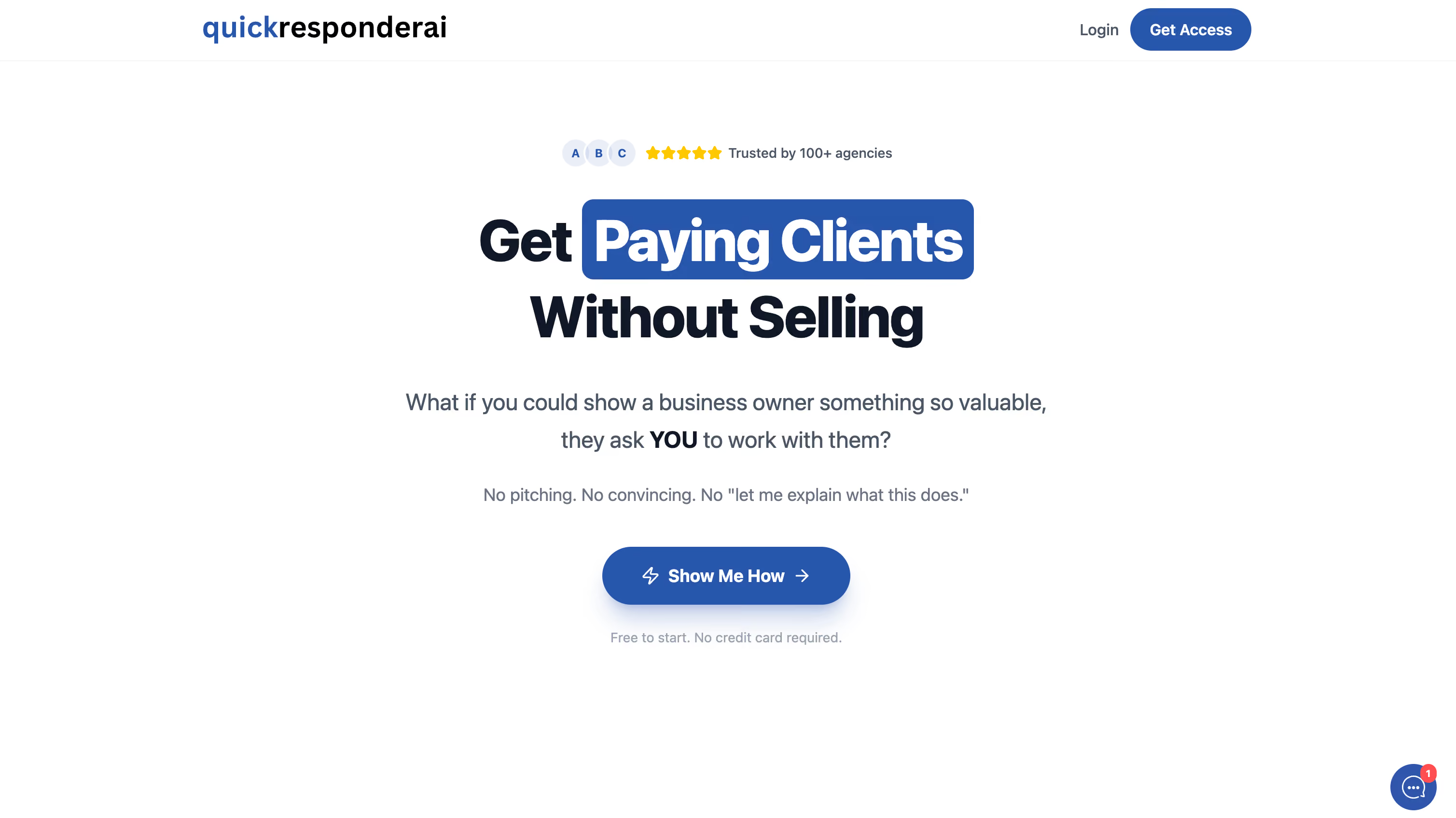
Quick Responder AI launched around the time ChatGPT went mainstream. It was built for the agency world: you enter a website URL, and the tool generates a live preview with a chatbot already installed and trained on the site’s content. The business owner can test it immediately.
“The normal way would be you go to a pizza shop, and you try to explain, ‘I have this AI chatbot, it can transform your business.’ You’re asking them to imagine it. What this software does is let the business owner actually test it. They can ask questions. They can see how it responds.”
The product was a natural fit for the agency training community Aby was already embedded in. The network was there, and the sales were relatively easy.
Quick Responder AI is still live and still making money.
Building it also gave him his first real WeWeb education. He made every beginner’s mistake: no components, manual workflows everywhere, repeated logic across pages.
“There were almost zero components because I was building everything one by one. The build was messy, but it worked, and it made money.”
For his second product, Aby decided to document the building process.
Instaglam.ai lets users upload photos of themselves and generate AI portraits in new settings. Aby built the entire product in WeWeb and Xano, and recorded 13 videos along the way:
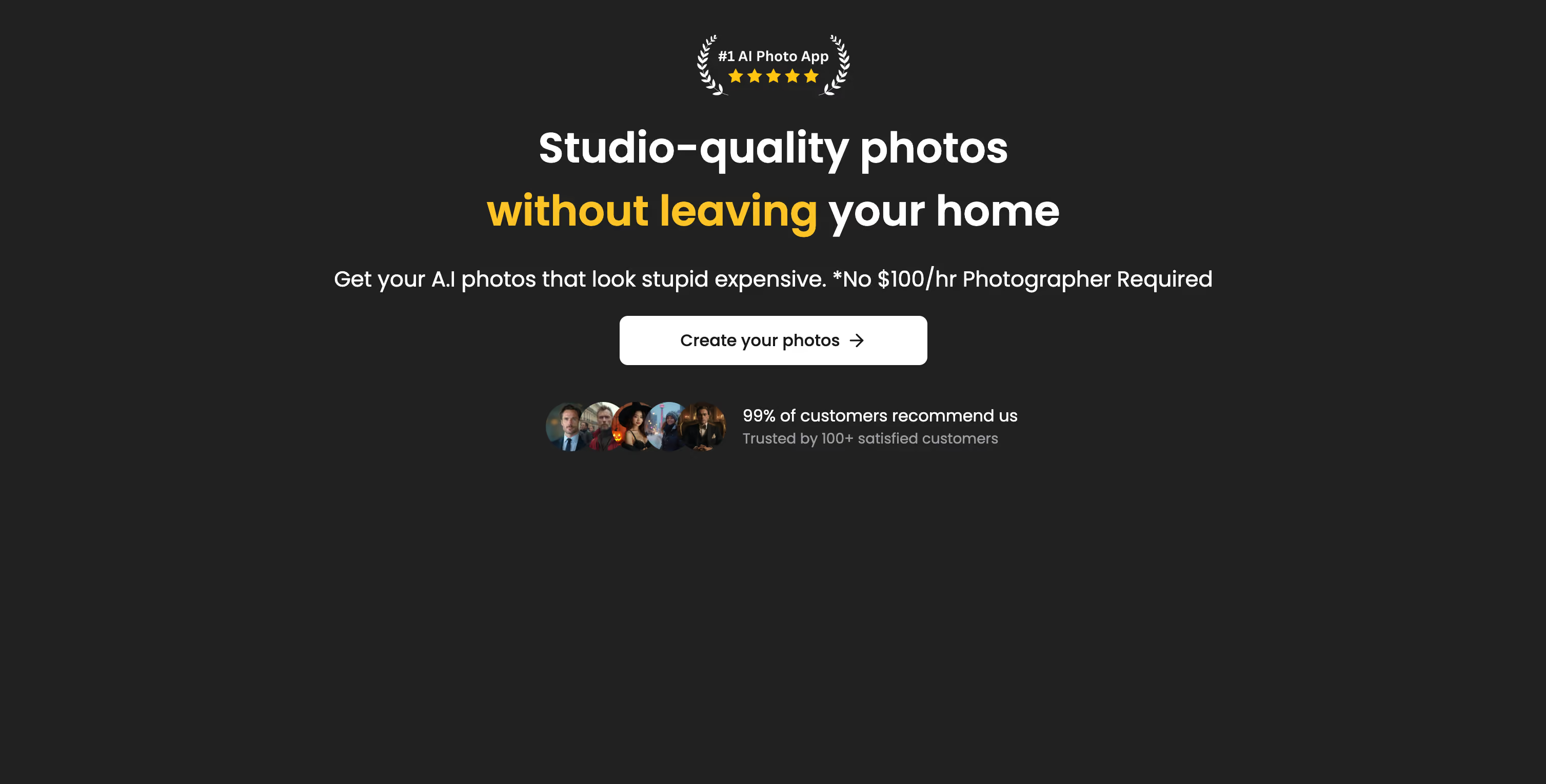
The videos were unedited, over-the-shoulder recordings. Sometimes he stared at the screen. Sometimes he scratched his head in front of the camera.
“I thought: if I had someone talking about these things when I was building, I would have saved a lot of time and money. So I recorded it for people who are just getting started.”
The audience was small but engaged. People said they learned a lot.
He ran Facebook ads, made sales, and then sold the product to a Canadian buyer.
Alongside his own apps, Aby was still doing consulting work.
He had connected with Unique Media Group, a US-based company that routes inbound calls to insurance agents.
Aby was deep in Unique Media Group’s operations when he spotted a structural problem. Their entire operation was manual: agency relationships, post-paid invoicing, agreements signed by hand.
He proposed something different: a marketplace where insurance agents sign up, load a prepaid balance, and select what type of calls they want. Press a button. Calls start coming in.
“I said: what if we build a system where agents sign up, click a button, and they take calls right from their computer? Prepaid. And they were like, ‘Let’s build it.’”
That became callers.io:
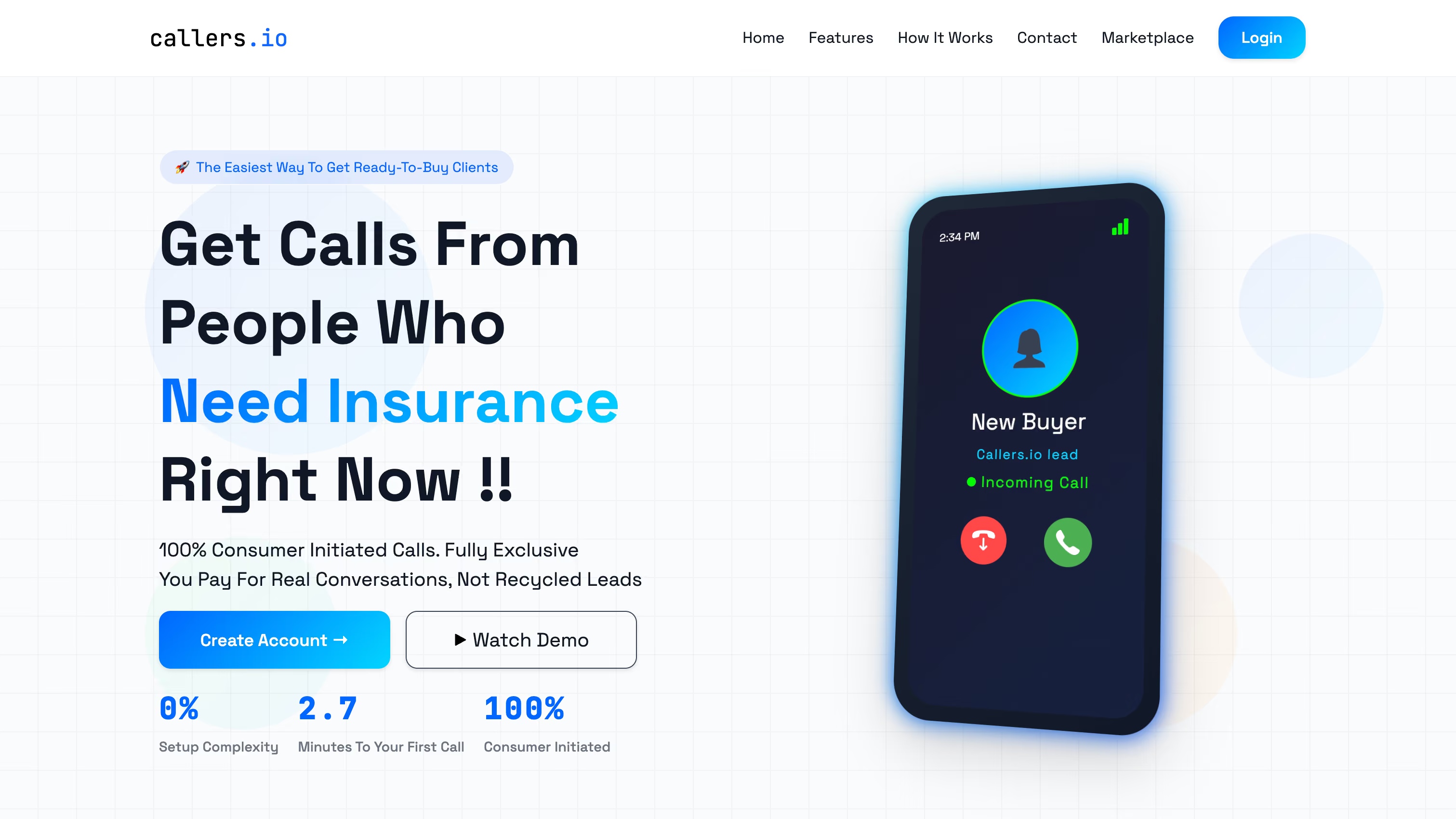
Building it required his most complex setup so far. Agents receive calls directly inside the app, which meant creating a working softphone using a custom WeWeb component.
“I had to learn how WeWeb components are set up from scratch. Since WeWeb made the normal components public on GitHub, I could read the source code, understand the structure, and build from there.”
The result is a component that handles real calls, inside a real production app, without taking the rest of the application down if something goes wrong.
“If something breaks in that component, the entire app doesn’t go down.”
callers.io has already crossed $150K in revenue and is used daily by hundreds of agents. Aby holds an equity stake negotiated as part of the partnership.
As AI coding tools have improved, the obvious question is: why not just generate the whole thing?
Aby has thought about it.
“I’m not convinced AI can build something this complex end-to-end just yet. It’s a powerful tool, but you still need to understand the fundamentals, especially around things like security. For example, if I know which endpoints need protection, I can guide the AI to implement the right safeguards. That’s something I can do visually in WeWeb and Xano.”
Aby has tested other no-code builders over the years. But a few things keep him using WeWeb.
All of Aby’s products rely on Xano as the backend, so the frontend needs to work with it seamlessly.
With WeWeb, connecting to his backend is straightforward. He can pull endpoints directly and start using them without extra setup.
“In other tools, I have to copy-paste the API, configure authentication, and other stuff. Here, it’s just click and go.”
For Aby, ownership matters, and he doesn’t want to be locked into a platform.
WeWeb gives him the option to export his code and keep control over what he builds.
“I like that you allow code export and don’t lock me into your hosting and ecosystem. That’s a huge advantage.”
Custom components became essential as his apps grew more complex. They allowed him to build features like the softphone in Callers.io without leaving WeWeb.
“Since WeWeb made their normal components public on GitHub, it was easy for me to learn and understand,” he says.
When he built Instaglam.ai alone, Aby handled everything: the product, the videos, the Facebook ads, the customer support. He made sales. He also burned out.
“I hated the grind. I am a builder.”
His advice for anyone trying to turn a WeWeb product into a business:
“Be good at one thing and partner with someone who can help you achieve your goals. Go to someone who already has the customers and the platform to sell. You’ll give up a percentage. But 100% of zero is zero. I would rather have a piece of a big watermelon than own all of nothing.”
On the building side, his recommendation is simple: learn custom components.
“Now that we have AI, custom components are going to increase your speed. But it’s not just speed. AI can build much better components than you can from scratch. Use that. Custom components are the biggest thing I would focus on.”
Aby started with automations, then built his first product and improved with each project.
Over time, he moved from building alone to working with partners, and from simple tools to production systems.
Through all of it, he kept the same stack: WeWeb and Xano.
“Choosing WeWeb was one of the best decisions I made,” he says. “It made it possible for me to learn, build, and keep improving without having to switch tools.”
Want to build production-grade apps like Aby without giving up control? Try WeWeb for free.

