Merge Rocks helps startups and scale-ups take products from idea to market.
Their work spans product design, app and website development, MVPs, and brand and go-to-market assets. The team is expected to own the process end to end and move fast.
But as the number and complexity of projects grew, moving fast became harder to sustain. Friction between designers and developers started to stretch development cycles.
Initially, Merge Rocks relied primarily on a traditional Next.js-based workflow: designers finalized layouts in tools like Figma, developers then built UIs in code, connected APIs, ran QA, and deployed changes to production.
Designers were involved early, stepped back during development, and returned only at the review stage.
This approach came with trade-offs: a single feature release that included layout implementation, API integration, optimization, and QA could take three to five weeks.
Even small visual tweaks could trigger new development cycles.
Costs increased and iteration, testing and feedback cycles dragged on.
The team started exploring no-code tools that would allow their designers and developers to work side-by-side.
“We wanted designers and developers to work together so we could move faster. However, products we’re building are often complex, so we couldn’t compromise on scalability.” — Pavel Tseluyko, CEO
Most of the tools they evaluated fell short on design flexibility, performance, or backend integration.
What the team wanted was:
WeWeb, with its frontend-first approach and powerful Xano integration, stood out as the best fit.
Merge Rocks started testing WeWeb internally.
Their first project was an employee portal built to support team’s everyday workflows:
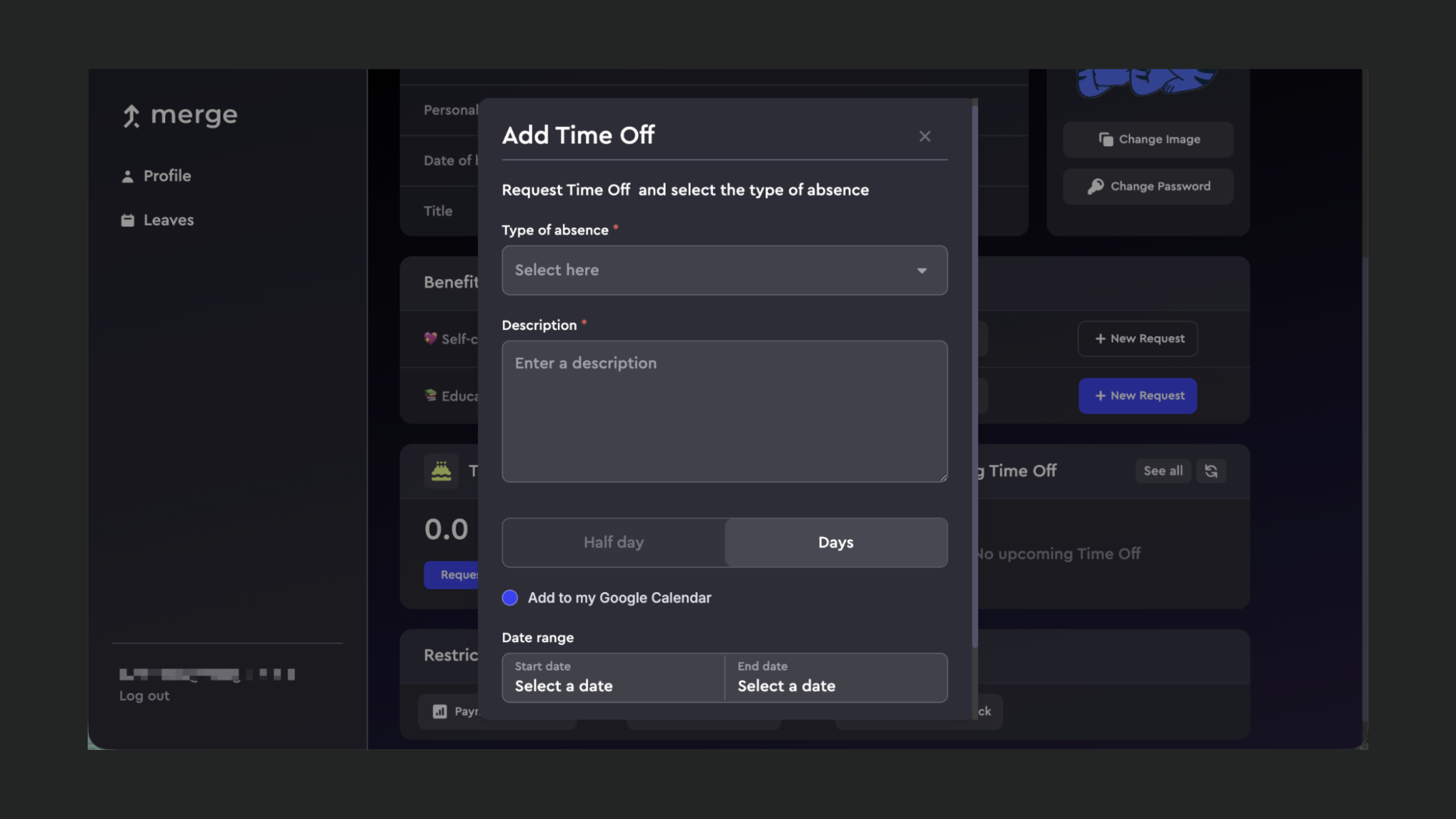
These workflows included:
The team worked together, in the same environment. Designers built and tweaked interfaces directly using WeWeb’s visual editor, while developers connected data and APIs, set up logic, and added custom code when needed.
“It clicked right away. It just made collaboration between designers and developers so easier.” — Pavel Tseluyko, CEO
After the internal success, the team started using WeWeb for client work as well. Some of the projects they built include, but are not limited to:
WeWeb is now a core part of their delivery stack, especially for client portals and data-driven apps.
The work between roles flows differently. Once designs are approved, the team moves into WeWeb and works in the same environment:
On average, development time is reduced by 2–3×, especially during layout and API integration.
“We can fix and adjust functionality live in just a couple of minutes. Something that used to take days or even weeks to validate in production.” — Pavel Tseluyko, CEO
This not only lowered developer hours per feature but also improved time-to-market for their clients.
Through multiple projects, the team refined a set of best practices when working with WeWeb.
Before starting to build, the team defines data structure and APIs and decides what lives in the backend versus the frontend. This helps them avoid rework later and ensures that developers and designers can work in parallel without blocking each other.
Takeaway: think through the data architecture in advance and clearly separate what is done in WeWeb and what belongs on the backend.
To move quickly without sacrificing consistency, the team sets up global styles and reusable components at the start of each project. That way, designers can then make consistent updates across pages without repetitive work.
Takeaway: using global styles and components from day one saves hours later on.
As projects grow, Merge Rocks relies on modular building blocks. This reduces duplication, keeps pages lightweight, and scales more easily.
Takeaway: a modular page structure reduces duplication and supports long-term scalability.
Performance is treated as a core part of the process, not an afterthought.
They test performance by tracking Core Web Vitals (LCP/INP/CLS), TTFB, page transition time, and p95 API response times for endpoints powering login, dashboard load, and search/filter interactions early on key user flows.
Takeaway: test performance early on the key user flows.
Merge Rocks is now focused on expanding its role as a long-term product and web partner rather than a project-only agency.
That shift requires fast feedback loops and continuous delivery, and WeWeb plays a key role in helping the team stay agile, efficient, and focused on what matters most: shipping great user experiences that drive business impact.
“WeWeb fundamentally changed how our designers and developers work together. We can iterate faster and deliver complex products with less friction.” — Pavel Tseluyko, CEO

